Contents
vivo X300 Ultra: Design, build quality and contents
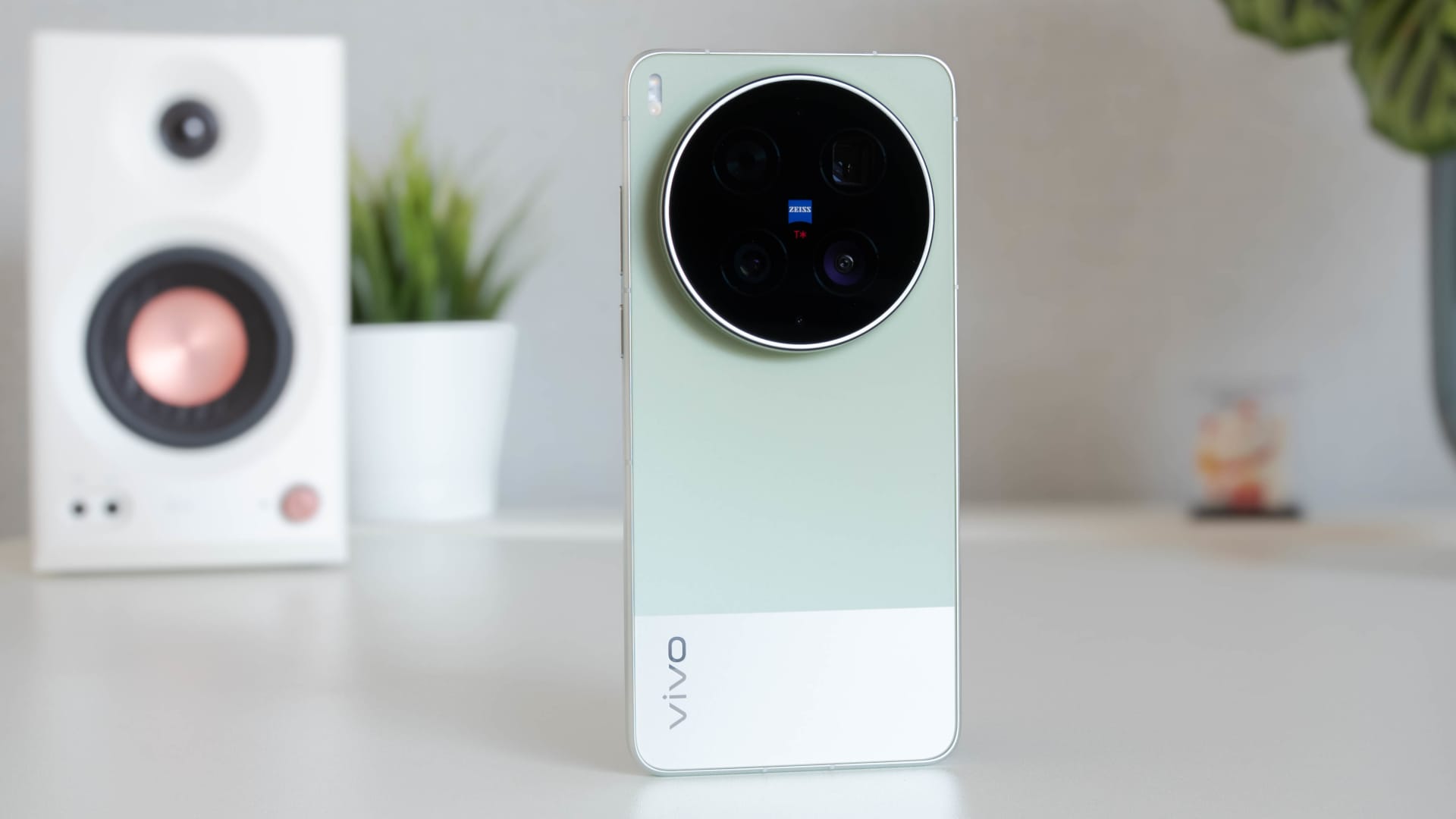
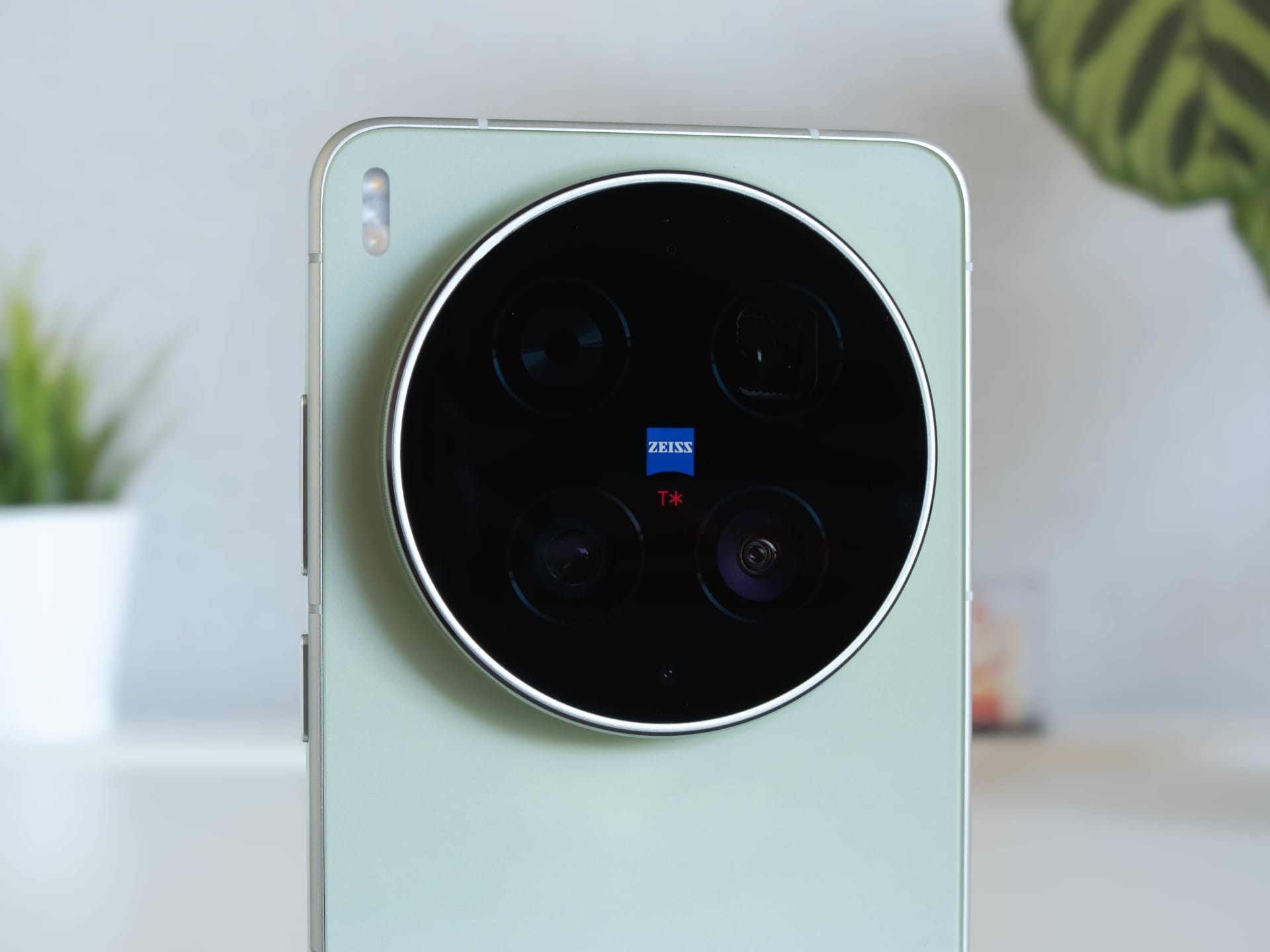
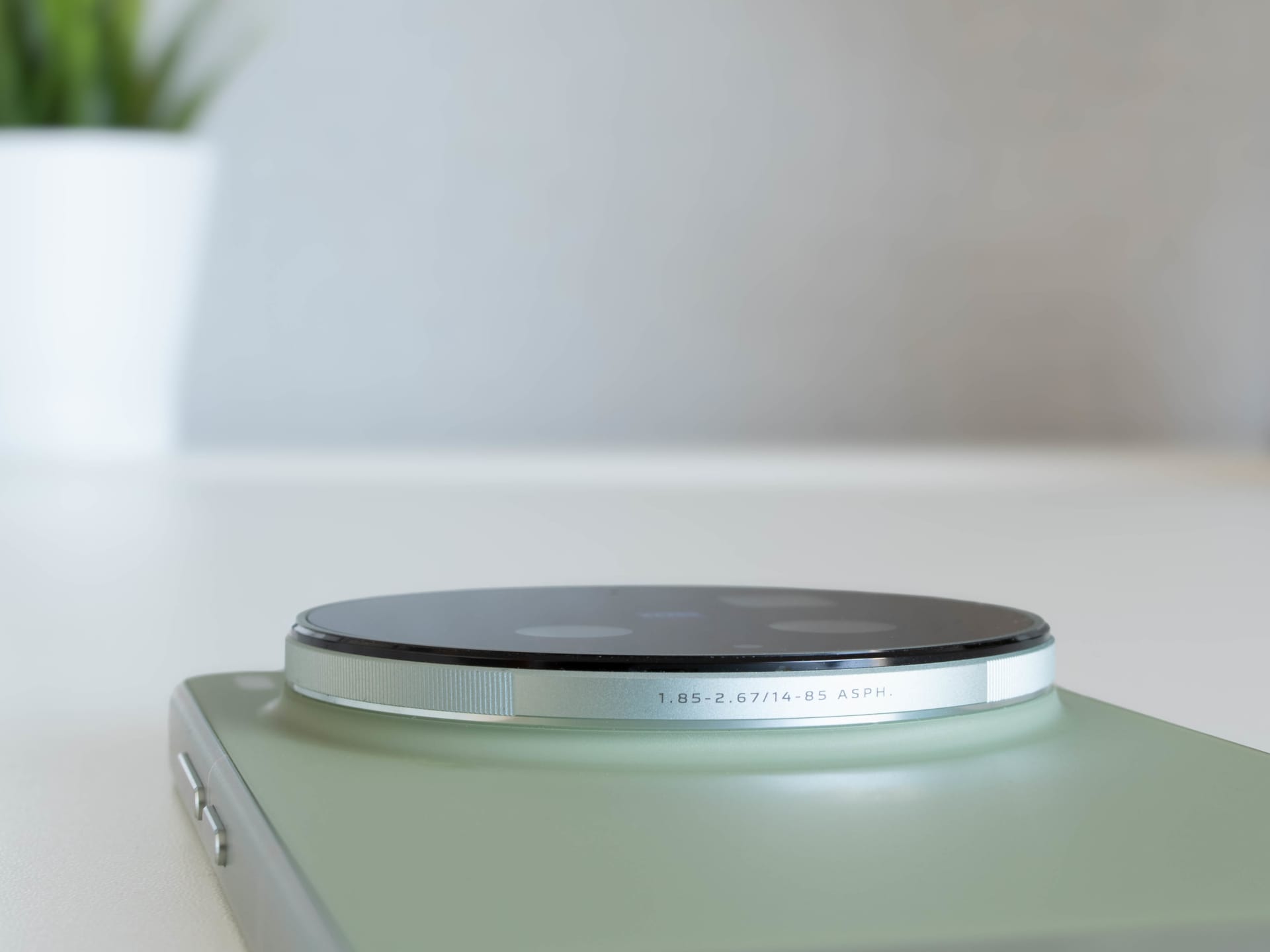
With the vivo X300 Ultra, the camera has not just shaped the design—it has taken it over entirely. The rest of the smartphone feels almost like an accessory for the enormous lens on the back.
The circular camera module protrudes a full 8 millimeters from the body, making it almost as thick again as the smartphone itself (8.49 millimeters). At its thickest point, the X300 Ultra therefore measures a good 16 millimeters. It is not exactly pocket-friendly, but vivo makes its priorities unmistakably clear from the outset.

Our green test device pairs a color-matched aluminum frame with a lightly textured glass back. Depending on the light, the surface looks either dark and understated or noticeably more vibrant. The black version is more subdued and uses a lighter fiberglass back instead of glass. This also affects its dimensions and weight. The black model is 8.19 millimeters thick and weighs 232 grams.
Thanks to their glass backs, the Green and White versions measure 8.49 millimetres and weigh 237 grams. Neither variant is light or compact. The large camera unit also shifts the centre of gravity noticeably towards the top of the body, but the X300 Ultra does not feel uncomfortably unbalanced.

The front and back are completely flat, while the wide aluminium frame provides a secure grip. The transitions between the materials are neatly finished, the buttons are firmly in place, and the casing does not give way even under pressure. The X300 Ultra feels as solid and premium as you would expect from a smartphone in this price range.
The body is protected against dust and water in accordance with IP68 and IP69. Under controlled conditions, it can withstand not only temporary immersion but also high-pressure, high-temperature water jets. That does not make it safe for a trip into the sea, but rain or a knocked-over glass will not faze the vivo.
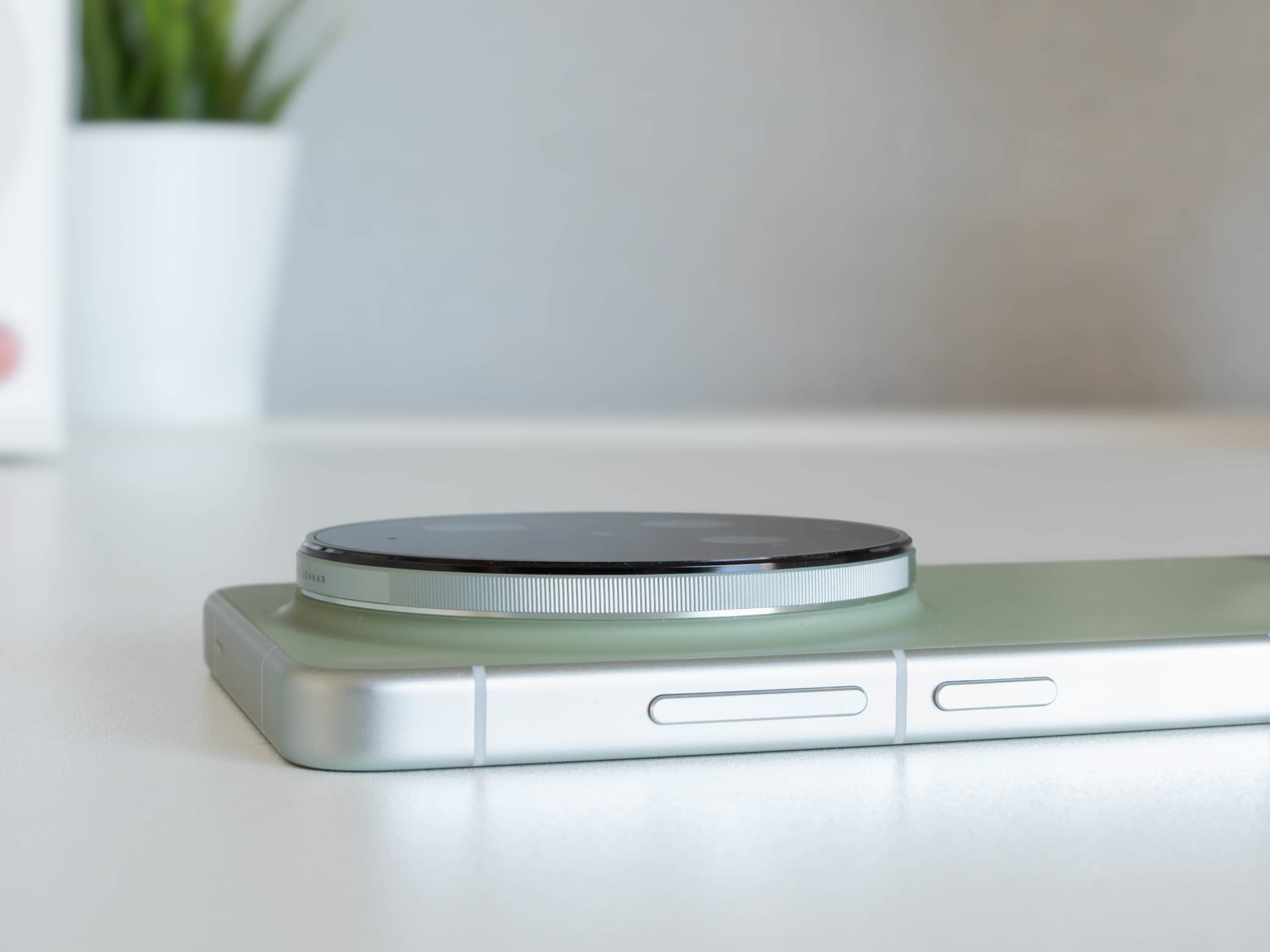
The volume rocker and power button are on the right-hand side, are easy to reach and offer clear tactile feedback. The X200 Ultra still had a dedicated camera button, while the vivo X300 Pro (review here) at least has a customisable shortcut button. The camera-focused X300 Ultra is missing both. This leaves only the touchscreen and volume buttons for quick shots.
USB-C, speakers, microphones and the SIM slot are located on the bottom. The 3D ultrasonic fingerprint sensor is built into the display and unlocks the smartphone quickly and reliably.
The European package contents include a USB-C cable, a SIM ejector tool, a protective case, a pre-applied screen protector and the usual paperwork. There is no charger included. While this is no longer unusual, it still feels stingy for a smartphone costing around 2,000 euros with a stated charging rate of 100 watts.
vivo X300 Ultra: Display
The front is calm once again. The fully flat 6.82-inch display has slim, even bezels and a small cut-out for the punch-hole camera. After the rather extroverted rear, it is almost surprisingly understated.
The LTPO AMOLED has a resolution of 3168 x 1440 pixels, giving it a pixel density of 510 ppi. Text and images are therefore displayed with corresponding sharpness, and individual pixels cannot be made out even at very close range.

The panel also excels when it comes to colors and contrast. As is typical of AMOLED, blacks are deep, while colors look vivid and can be toned down using different profiles. It supports the P3 color gamut and 10-bit color depth, as well as Dolby Vision, HDR10+ and HDR Vivid.
Android Ultra HDR looks particularly good. Photos taken in the appropriate format contain additional brightness information, making things like reflections from the sun, lamps or bright clouds appear more intense. Rather than simply brightening the entire image, the effect is applied only to the relevant areas. In vivo's Gallery and Google Photos, this gives images noticeably more dynamic range.
vivo claims a local peak brightness of 4500 cd/m². As usual, this figure applies only to a tiny area of the screen and under ideal conditions. In our test, the display reached around 1900 cd/m² across a larger white area with automatic brightness adjustment, and up to 3250 cd/m² in a smaller area. That’s more than enough to reliably assess framing, focus and exposure, even in direct sunlight.
The panel can be dimmed down to around 1 cd/m². This is pleasant when reading in the dark and prevents a quick glance at your phone at night from lighting up the whole bedroom. vivo also uses 2160 Hz PWM dimming to reduce visible flicker at low brightness.
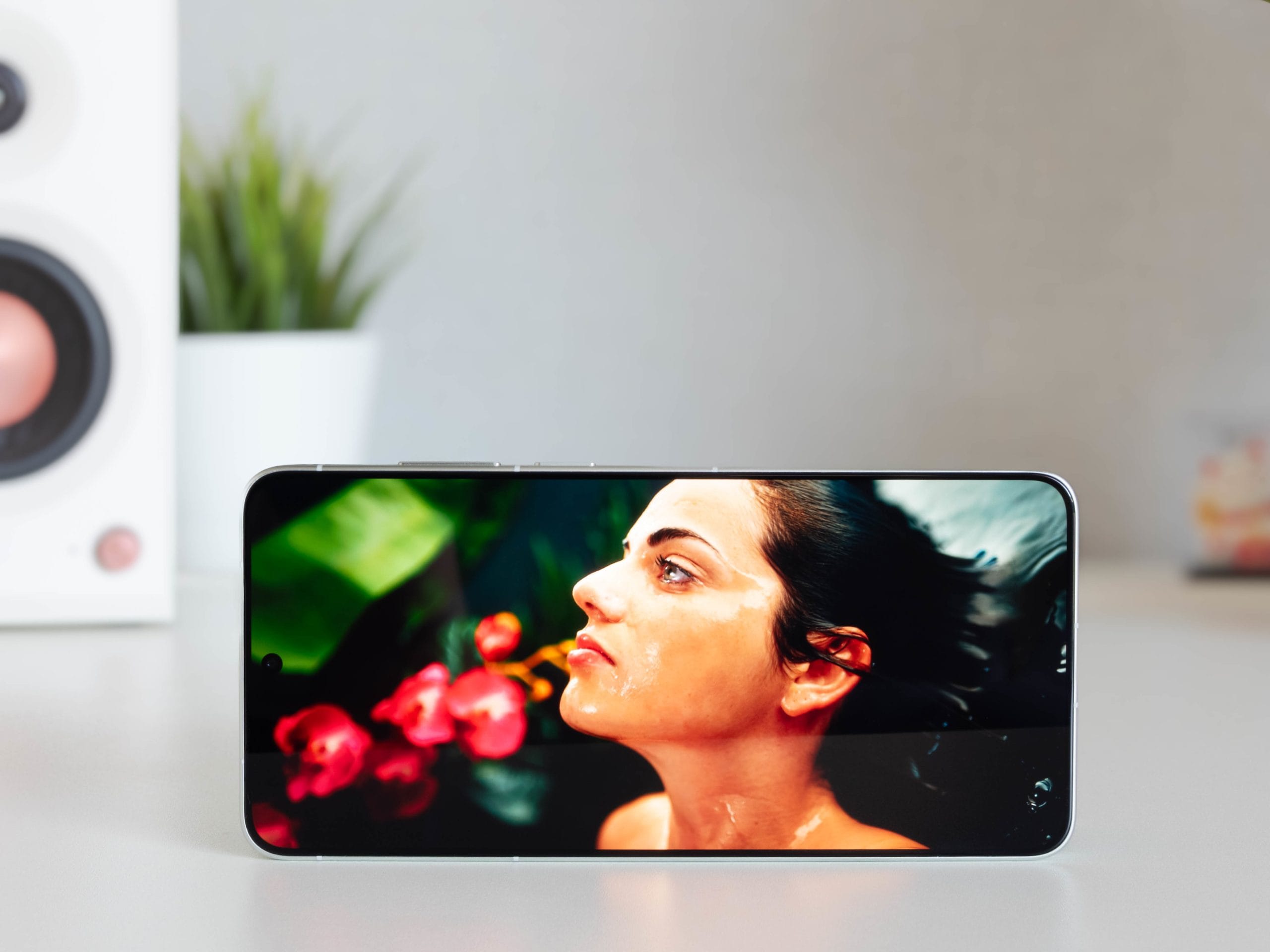
Thanks to LTPO technology, the refresh rate dynamically adjusts between 1 and 144 Hz. For static content, the display drops to as low as 1 Hz; when scrolling and in supported apps, the rate increases accordingly. This makes animations look smooth without constantly taxing the battery with the maximum refresh rate.
However, the advertised 144 Hz exists more on the spec sheet than in everyday use. Most apps run at a maximum of 120 Hz, while some are limited to 90 or 60 Hz, depending on the selected mode. The full 144 Hz is available only in a few supported games and, in some cases, through frame interpolation. I did not noticeably miss it, as 120 Hz already looks perfectly smooth.
vivo X300 Ultra: performance
There’s no skimping on the processor beneath the huge camera module either. The Snapdragon 8 Elite Gen 5, Qualcomm’s current flagship, is on board. Manufactured using a 3 nm process, the chip combines two Oryon cores clocked at up to 4.6 GHz with six more cores running at a maximum of 3.62 GHz. Graphics are handled by the Adreno 840, while memory consists of 16 GB of LPDDR5X and 1 TB of UFS 4.1 storage.
Storage should remain ample for a long time, even if you regularly take high-resolution photos, 8K videos or RAW files. There is no microSD card slot. With this much storage, most users should be able to live without one.
In everyday use, the X300 Ultra is exceptionally responsive. Apps open without any perceptible delay, large photo galleries are easy to browse, and the interface remains stable even when switching between the camera, image editing, navigation and messaging apps. Even large RAW files and high-resolution videos don't slow the smartphone down.
In Geekbench 6, the X300 Ultra scores around 3488 points in the single-core test, placing it firmly in the current flagship class. In 3DMark Wild Life Extreme, the smartphone scores around 6442 points.

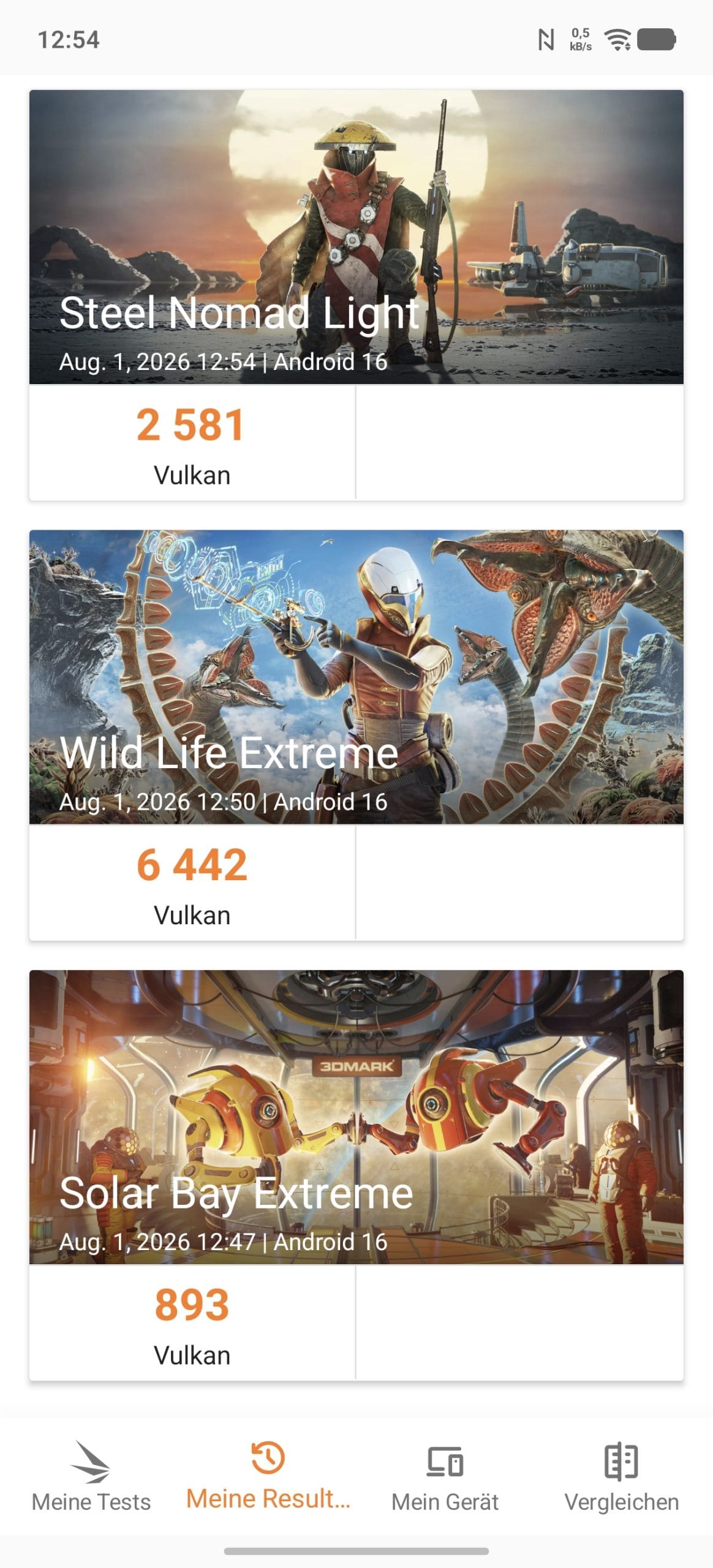
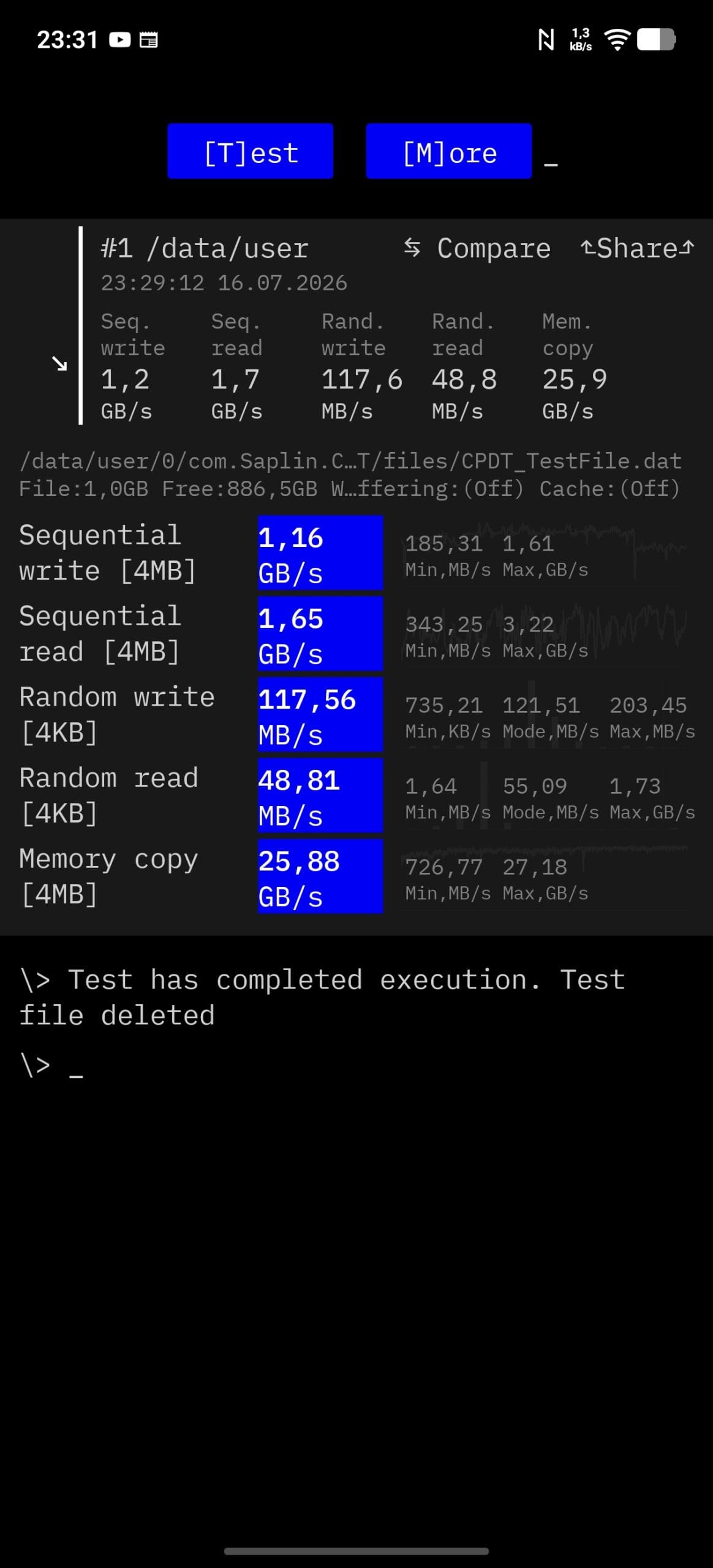
That means the X300 Ultra does not win every comparison. The Galaxy S26 Ultra, with its higher-clocked Snapdragon variant, is sometimes ahead, while phones with the MediaTek Dimensity 9500 can also keep up or pull ahead in individual tests. In everyday use, these differences are about as relevant as the last decimal place in a sprint from zero to 100. The vivo is fast in every situation.
Even demanding games run smoothly at high to maximum detail settings. The high display resolution puts more strain on the GPU than on many competitors, but this does not lead to any noticeable problems. Frame rates above 60 fps depend more on the game in question and vivo's refresh-rate management than on available processing power.
Under sustained full load, the smartphone can lose around 35 per cent of its maximum performance. That may sound like a lot at first, but it is within the usual range for current flagship processors. The heat generated cannot be made to disappear entirely, though. During long gaming sessions, benchmarks or extended video recording, the casing gets noticeably warm. At least the huge camera module means your fingers are not directly over the hottest area while gaming.
vivo X300 Ultra: Connectivity
The vivo X300 Ultra offers almost everything you can currently fit into a smartphone when it comes to connectivity. It comes with 5G, dual SIM, eSIM, Wi-Fi 7, Bluetooth 6.0, NFC and an infrared transmitter. There was no room left for a traditional headphone jack or FM radio among all those antennas.
Mobile network
The SIM tray takes two Nano-SIM cards. Alternatively, you can use one physical SIM and an eSIM, or two eSIM profiles at the same time. 5G works on both lines in dual-SIM dual-standby mode. Most European and international mobile network bands are supported.
Things are a little different with the Chinese version. It lacks a freely usable eSIM, and some features relevant to Europe may be restricted. So if you order the X300 Ultra as a considerably cheaper import, you should check not only the storage and case colour, but also the mobile network bands, Android Auto and Google integration.
In everyday use, the global model delivers a stable mobile connection. Call quality is clear, and callers sound neither tinny nor as if they were calling from the camera module.
Wi-Fi and Bluetooth
For local networks, the X300 Ultra supports Wi-Fi 7 and connections over 2.4, 5 and 6 GHz. 2x2 MIMO and MU-MIMO are also included. With a compatible router, the smartphone achieves high transfer speeds, although the practical benefit of Wi-Fi 7 naturally depends on whether your home network is similarly well equipped.
Bluetooth 6.0 supports aptX HD, aptX Adaptive and LHDC 5, among others. This makes it possible to use high-quality Bluetooth headphones with good sound quality and comparatively low latency. We noticed no connection dropouts or unusually short range during the test.

NFC, infrared and USB
NFC supports not only reading and writing tags, but also card emulation and contactless payments via HCE and a compatible NFC SIM. The latter must be in the first SIM slot. As usual, the standard HCE function is sufficient for Google Wallet.
The infrared transmitter is also back, although you won't find it on the casing. vivo has hidden it around the camera module. This lets you use the smartphone as a remote control for TVs, air conditioners and other devices. With a camera bump this large, a small satellite dish attachment of its own probably wouldn't have stood out either.
The fast USB-C port is a welcome feature. Instead of USB 2.0, it uses USB 3.2 at up to 10 Gbit/s. Large RAW files and 8K videos can therefore be transferred to a computer or external storage much faster. OTG is also supported. External SSDs, card readers and other USB accessories can be connected directly. DisplayPort also lets you output the image via cable to a compatible monitor or TV.
Location and security
For positioning, the X300 Ultra uses GPS, BeiDou, GLONASS, Galileo, QZSS and NavIC. It determines its position quickly, and the signal remains stable even while moving. Accuracy may fluctuate briefly between taller buildings, but overall the smartphone navigates reliably.
A 3D ultrasonic fingerprint sensor under the display handles unlocking. It responds quickly, has a pleasantly large recognition area and works more reliably with slightly damp fingers than the optical sensors in many cheaper devices. Face recognition is also available, but without additional depth-sensing hardware it relies solely on the front camera.
Speakers
The stereo speakers deliver high volume and generally clean sound. Voices are easy to understand, videos sound sufficiently spacious, and the audio remains largely controlled even at higher volumes. However, compared directly with the best flagships, there is a slight lack of bass and fullness.
OriginOS also offers an equalizer, various sound profiles, spatial audio effects and personalized adjustments based on your hearing. Some functions overlap a little in their descriptions, so you may need to try them out at first. If you use Bluetooth headphones anyway, you will probably open most of them once and then forget about them.
vivo X300 Ultra: Operating system
Instead of the FuntouchOS previously used internationally, global models now also get the much more modern OriginOS 6 (Android 16) interface, which was long reserved for devices sold in China.
The interface feels fast and uncluttered, and in many places noticeably more considered. Animations respond to the speed of finger movements, transitions feel smooth and subtle blur effects add depth.

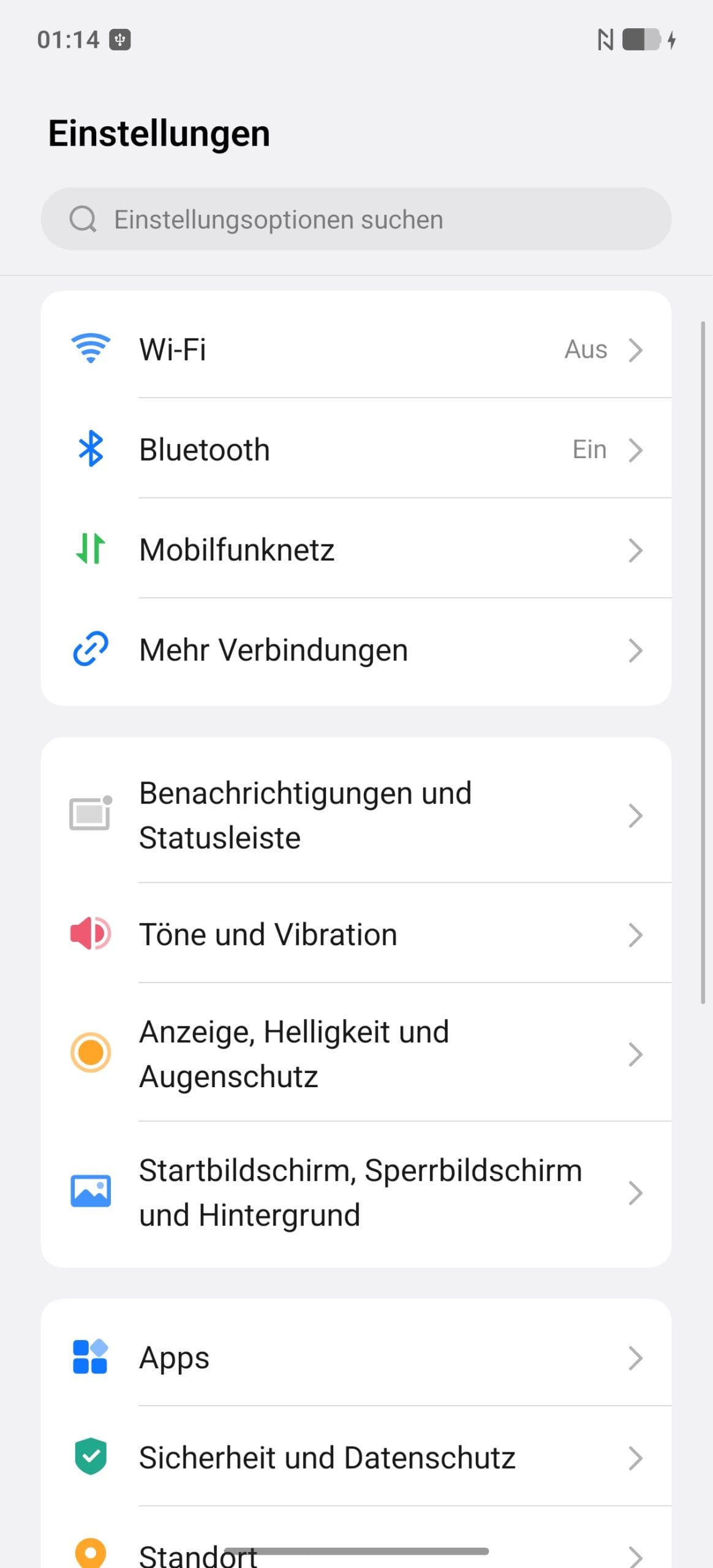
Notifications and quick settings are separated by default. Swiping from the left opens notifications, while swiping from the right brings up the Control Center. If you do not like this approach, familiar from iOS, you can combine the two views again in a classic notification shade.
The customization options are extensive overall. You can personalize the lock screen, Always-On Display, animations, widgets, fonts and icons. In particular, Flip Themes make OriginOS more customizable than many more restrained Android interfaces.

Artificial intelligence is naturally part of the picture in 2026, too, but on the vivo X300 Ultra it is a little more understated and less extensive than on some other manufacturers’ devices. The system offers tools for writing, correcting, rephrasing and summarising text. System-wide subtitles can transcribe and translate speech in real time. In the gallery, vivo brings together various tools for removing, moving or optimising image content.
vivo's Connection Center brings together features for working with computers and other smartphones. These include screen mirroring, file transfer and handing off ongoing tasks. Depending on the feature, an additional vivo app is required to connect with Apple devices.


The European X300 Ultra comes with all the usual Google services. Play Store, Wallet, Maps, Gemini, Android Auto and Quick Share all work without having to install anything manually. That may sound obvious, but it matters for the X300 Ultra because the Chinese version is sometimes offered for less than half the European price. Google Play and its associated services can be installed relatively easily on that version, but the experience is not completely identical as a result.
Alongside Google's apps, the vivo X300 Ultra also comes with its own apps, but largely avoids the collection of Chinese app stores and third-party services. OriginOS is not entirely free of bloatware, but most of it can be removed or ignored.
For long-term use, vivo promises five major Android updates and seven years of security updates. While this does not quite match the maximum update support offered by competitors such as Samsung or Google, it represents a significant step forward compared with previous generations.
vivo X300 Ultra: camera
Let's turn to the most important and exciting aspect of the vivo X300 Ultra. Two sensors with 200 MP each, an unusually sophisticated ultra-wide-angle camera and focal lengths from 14 to 85 millimetres are intended to make Apple, Samsung and most compact cameras look nervously over their shoulders.
The main camera uses the new Sony Lytia 901 in a large 1/1.12-inch format. In front of it is an optically stabilized lens with an f/1.85 aperture and a 35-millimeter focal length. So instead of cramming as much as possible into the frame, vivo starts with the perspective that classic reportage and travel photography has called home for decades.
The telephoto camera combines 200 MP with the Samsung ISOCELL HP0 in a 1/1.4-inch format, an f/2.67 aperture and an 85 mm focal length. Compared with a typical 23 mm focal length, this corresponds to approximately 3.7x zoom. vivo has therefore deliberately opted not to include a second telephoto camera, relying instead on the large sensor to cover longer focal lengths digitally.
It also has a 50 MP ultra-wide-angle camera with a 14 mm focal length, autofocus and optical image stabilization. Its Sony Lytia 818 sensor measures 1/1.28 inches, making it large enough to serve as the main camera on many other smartphones.
Main camera
In daylight, the main camera delivers detailed, high-contrast shots with a wide dynamic range and the characteristic vivo color rendering.
Colours have a certain pop, shadows look rich and bright areas are well controlled. The result is not perfectly neutral in every situation, but usually looks very appealing even without post-processing.
The white balance works reliably. Even in mixed lighting or with subjects featuring large bright and dark areas, the colours do not suddenly shift towards yellow or blue. Skies, façades and skin tones remain largely consistent.
The 35 mm focal length clearly sets the X300 Ultra apart from smartphones, whose main cameras are usually between 23 and 25 mm. You capture less in the frame, but subjects look more naturally proportioned. People in particular benefit, as their faces are not distorted as much when photographed from close range.
Test shots from the main camera at a focal length of 35 millimetres:


There are also digital focal lengths of 50 and 70 millimetres, which also look good. Thanks to the high sensor resolution, the main camera can zoom relatively far into the image before the quality visibly deteriorates.
The large sensor produces a visibly shallow depth of field with close-up subjects. Objects and people stand out naturally from the background, without the portrait mode having to artificially detect edges. The bokeh is mostly smooth and pleasing.
However, the shallow depth of field also has a downside. With subjects spread across several planes, not everything is automatically in focus. If you are photographing documents, larger groups or a table laden with food, keep some distance or pay closer attention to the focus point.
The camera offers four resolution options: 12.5, 25, 50 and 200 MP. In most situations, the 12.5 MP default mode already offers the best balance of detail, processing and file size. The higher resolutions allow more room for cropping, but their advantages are most apparent in good light; they also produce larger files.
At night, the main camera handles bright signs, streetlights and illuminated windows very well, without letting darker areas simply sink into black. Colours remain vivid, the white balance is stable and image noise is low. Fine details are preserved cleanly as long as the subject is not in complete darkness.
Test shots at dusk and at night:


Telephoto camera
The telephoto camera often took centre stage during testing. At its native 85 mm focal length, equivalent to a 3.7x zoom, the X300 Ultra delivers exceptionally sharp, high-contrast photos. The colour tuning matches the main camera well, so switching between focal lengths does not produce a completely different look.
The subject separation was also impressive. Even without software, the large sensor and longer focal length create a pronounced bokeh effect. Plants, animals, details and people stand out clearly from the background, and 85 millimetres is almost ideal for portraits. Faces look naturally proportioned, the shooting distance is comfortable and the background is optically compressed. Head-and-shoulders portraits are therefore among the best shots produced by the X300 Ultra.


The main camera’s additional resolution options are also available with the telephoto camera, although the full 200 MP resolution looks noticeably softer, especially indoors or in low light. More pixels do not automatically mean more actual information, however enthusiastically the figure on the spec sheet is presented.
The telephoto camera also performs well at digital zoom levels. Up to 230 millimetres (10x zoom), shots in good light look almost as if they were taken with a dedicated optical focal length. Beyond that, image processing becomes much more noticeable. The zoom of up to 105x is then better suited to identifying distant subjects than to taking usable photographs.
With a minimum focusing distance of around 15 centimetres, the telephoto camera is also suitable for detailed close-ups with a soft background. At night, it also impresses at up to 135 millimetres with sharp images, rich colours and good dynamic range. From 170 millimetres onwards, the software intervenes noticeably more and sometimes creates artificial detail in fine textures.


Ultra-wide-angle camera
Thanks to its large 1/1.28-inch sensor, the ultra-wide-angle camera performs well above the usual level for cameras in this class. In daylight, it delivers detailed shots with a wide dynamic range, vivid colors and surprisingly consistent sharpness right to the edges of the frame.
At 14 millimetres, it is particularly well suited to architecture, interiors and landscapes, while autofocus also enables close-up shots. The 28 mm view, cropped from the sensor, also works well, but falls short of the main camera when capturing fine detail.
The ultra-wide-angle camera also performs above average at night, although its sharpness and shadow detail do not quite match the level of the main and telephoto cameras.






Front camera
The front camera has a resolution of 50 MP, features autofocus and uses a 24 mm focal length. This gives it a slightly narrower field of view than some competitors with 21 or 23 mm lenses. It is more than adequate for regular selfies, but you will need to extend your arm further to fit larger groups in.
Sharpness, colours and dynamic range impress. Faces are captured in fine detail and, thanks to autofocus, remain reliably sharp at different distances.
Image processing occasionally smooths individual areas of the face somewhat selectively. This is most noticeable on closer inspection, while other areas remain very sharp. It makes little difference for social media and video calls, but it is still worth mentioning in a camera phone of this calibre.
The front camera records video in 4K at up to 60 frames per second. Electronic stabilization keeps footage reasonably steady while walking, and autofocus is particularly useful when recording moving subjects.
Video
The X300 Ultra boasts an impressively long list of video features. All three rear cameras record in 8K at 30 frames per second and 4K at up to 120 frames per second.
Dolby Vision is available at a wide range of resolutions and frame rates. There are also 10-bit Log recordings, importable LUTs and various codecs. Even Samsung's professional-oriented APV codec can be used for Log video.
The Pro Video mode offers manual control over exposure, white balance and focus. Audio level and waveform displays help you set up recordings properly. Depending on the mode, frame rates such as 24, 25, 50 or 100 fps are also available.
Stabilization is among the very best. Footage recorded while walking looks steady without the image being unnaturally locked in place. Shaking, wobble and the typical little jolts with each step are largely absent.
Colours and dynamic range are very good on all three cameras. The images look vivid without being overdone, and bright areas are usually preserved cleanly.
vivo X300 Ultra: Photography Kit
The optional Photography Kit turns the vivo X300 Ultra into a compact camera with interchangeable clip-on lenses. It includes a special protective case with a bayonet mount, various teleconverters and a separately attachable camera grip. However, for our test, only the case and the large 400 mm lens were available, not the grip. Alternatively, vivo offers a much more compact second-generation 200 mm lens, which is intended mainly for Asian markets.

The lens attaches to the mount on the protective case, placing it directly in front of the 85 mm telephoto camera and optically extending its focal length. Once it's attached, just tap the corresponding icon in the camera app, then select the lens you're using. The 400 mm model also offers digital zoom steps at 800, 1600 and 3200 mm.
Even at 400 millimetres, distant animals, architectural details or aircraft can be captured much more clearly than with digital zoom alone. Image processing does increasingly more work beyond that, but as expected, results remain better with the lens than without the clip-on lens.


It is not a compact setup. The large, heavy 400-millimetre lens makes the already substantial X300 Ultra an even bulkier setup, not something you would spontaneously take along on a stroll around town. Hand-held shots are possible, but for longer focal lengths and precise composition, a solid support or tripod is recommended.
The complete Photography Kit also includes an attachable grip with a two-stage shutter button, zoom lever, control dial, and additional video and function buttons. This makes the X300 Ultra feel much more like a compact camera to use. For video recording, vivo also offers a separately available SmallRig cage with handles, accessory mounts and active cooling.
Here is a comparison shot, once with the 400 mm lens and once without.


vivo X300 Ultra: battery
Capacity increases from 6000 to 6600 mAh compared with the vivo X200 Ultra. In everyday use, the battery easily lasts a long day of camera use, navigation, messaging, social media and streaming. Those who use the X300 Ultra more moderately can also get a day and a half out of it. However, extended photography trips, 4K videos and the permanently bright display visibly drain the battery, so intensive users are unlikely to see two days of battery life remaining in the evening.
It charges via a suitable power adapter, using a cable, at up to 100 watts. After 15 minutes, the indicator shows around 35 per cent; after half an hour, about 65 per cent. A full charge takes approximately 45 minutes.
Wireless charging is supported at up to 40 watts. The X300 Ultra can also power other devices, both wired and wirelessly. You can set a charging limit to protect battery health. If you like, OriginOS can also adapt charging to your usage habits and pause it overnight, for example.
Our verdict
The vivo X300 Ultra is large, heavy, uncompromisingly focused on photography and, at around 2,000 euros, priced almost as confidently as its camera module is sized. Add the Photography Kit and you quickly reach a price range where attractive interchangeable-lens compact cameras are also available.
The 400 mm teleconverter is technically impressive and fun to use, but for me it's more of a cool gimmick than a genuine reason to buy. The smartphone doesn't need this accessory anyway: its main, telephoto and ultra-wide-angle cameras deliver some of the best, if not the best, image quality currently available on a smartphone. The 35 mm main camera and versatile 85 mm telephoto camera in particular stand out from many competitors.
The overall package is also convincing beyond the camera. The display, performance, battery life and OriginOS 6 are all at flagship level. It is a little disappointing that vivo does not quite match Google and Samsung when it comes to its update guarantee. Five major Android versions and a total of seven years of security updates are respectable, but maximum protection would have been more appropriate for a smartphone in this price class.
I missed a dedicated camera or shortcut button even more. Of course, you can take a photo using the volume rocker, but in landscape orientation it is harder to locate by touch and does not offer the same direct control. For a smartphone that so emphatically presents itself as a camera, a dedicated button would have rounded off the concept nicely.
Ultimately, price remains the biggest hurdle. If all you want is a fast, high-quality flagship, you can find much better value elsewhere. But if you're willing to spend big on an exceptional smartphone camera, the vivo X300 Ultra delivers a device that not only calls itself a true Ultra, but feels like one too.
Specifications
Processor and memory
- CPU
- Qualcomm Snapdragon 8 Elite Gen 5 Mobile Platform (3 nm)
- – 2x Oryon V3 Phoenix L up to 4.6 GHz
- – 6x Oryon V3 Phoenix M up to 3.62 GHz
- GPU
- Adreno 840
- RAM
- 12 GB / 16 GB LPDDR5X Ultra Pro
- Virtual RAM expansion
- Up to 16 GB
- Internal storage
- – 256 GB + 12 GB RAM
- – 512 GB + 12 GB RAM
- – 512 GB + 16 GB RAM
- – 1 TB + 16 GB RAM
- Storage type
- UFS 4.1
- Storage expansion
- Not supported
Display
- Display size
- 6.82 inches (17.32 cm)
- Display resolution
- 3168 x 1440 pixels (510 PPI)
- Aspect ratio
- 19,8:9
- Display refresh rate
- 1–144 Hz
- Display brightness
- Up to 4500 cd/m² local peak brightness
- Display type
- LTPO AMOLED
- Luminous material
- Q10 Plus
- Touchscreen
- Capacitive multi-touchscreen
- Other
- – 1 billion colors
- – P3 color gamut
- – 105% NTSC color saturation
- – 2160 Hz PWM dimming
- – Dolby Vision
- – HDR10+
- – HDR Vivid
- – Ultra HDR image support
Cameras
- Back
- – Main camera
- 200 MP (f/1.85, 35 mm, 1/1.12", 0.7 µm, PDAF, gimbal OIS)
- – Periscope telephoto lens
- 200 MP (f/2.67, 85 mm, 1/1.4", 0.56 µm, multidirectional PDAF, OIS, 3.7x optical zoom)
- – ultra-wide-angle
- 50 MP (f/2.0, 14 mm, 116°, 1/1.28", 1.22 µm, dual-pixel PDAF, OIS)
- – Auxiliary sensor
- 5 MP (f/2.0)
- Macro function
- – Telephoto macro with a magnification ratio of 3.4
- 1
- Photo modes
- Snapshot, Landscape and Night, Portrait, Photo, Panorama, Ultra HD, Document, Stage, Pro Photo, Underwater, Spatial Camera, Food, Scan, Street Photography, Creative Mode
- Video modes
- Video, portrait video, slow motion, time-lapse, Pro video
- Video recording (rear camera)
- – 8K at 30 fps
- – 4K at 24/30/60/120 fps
- – 1080p at 30/60/120/240 fps
- – 10-bit Log video
- – Dolby Vision HDR video
- – HDR10+
- – Gyro-EIS
- Recording format
- MP4
- Front camera
- 50 MP selfie camera in the display (f/2.45, 24 mm, 1/2.76", 0.64 µm, autofocus)
- – 4K at 30/60 fps
- – 1080p at 30/60 fps
- – HDR
- – Gyro-EIS
- Flash
- – Rear LED flash
Mains
- Dual SIM
- – Nano-SIM + Nano-SIM
- – Nano-SIM + eSIM
- – eSIM + eSIM
- Standby mode
- 5G + 5G dual-SIM dual standby
- eSIM support
- Yes
- 5G
- n1/ n2/ n3/ n5/ n7/ n8/ n12/ n20/ n25/ n28/ n38/ n40/ n41/ n66/ n71/ n75/ n77/ n78/ n79
- 4G LTE-FDD
- B1/ B2/ B3/ B4/ B5/ B7/ B8/ B12/ B13/ B17/ B18/ B19/ B20/ B25/ B26/ B28/ B32 (reception only) /B66/ B71
- 4G LTE-TDD
- B34/ B38/ B39/ B40/ B41/ B42/ B43/ B48
- 3G WCDMA
- B1/ B2/ B4/ B5/ B6/ B8/ B19
- 2G GSM
- 850/ 900/ 1800/ 1900 MHz
- Satellite communication
- – Emergency calls, calls and messages via satellite
- – Only available with the model featuring 16 GB of RAM and 1 TB of storage
Wireless
- Wi-Fi
- – Wi-Fi 6
- – Wi-Fi 7
- – 2.4 GHz, 5 GHz and 6 GHz
- – 2x2 MIMO
- – MU-MIMO
- – Wi-Fi Display
- Bluetooth
- 6.0
- Bluetooth audio codecs
- – aptX HD
- – aptX Adaptive
- – LHDC 5
- NFC
- – Reading and writing mode
- – Card emulation mode
- – HCE payments
- – NFC SIM payments via SIM 1 slot
- Infrared
- Yes
- OTG
- Yes
- FM radio
- Not supported
- Audio
- Stereo speakers
- Hi-Fi
- Not supported
- Voice recording
- Supported
- Supported audio formats
- AAC, WAV, MP3, MIDI, Vorbis, APE, FLAC
- Supported video formats
- MP4, 3GP, AVI, FLV, MKV, WEBM, TS, ASF
Navigation and positioning
- GPS
- BeiDou
- GLONASS
- Galileo
- QZSS
- NavIC
- A-GPS
- Mobile network positioning
- Wi-Fi positioning
Sensors
- 3D ultrasonic in-display fingerprint sensor
- Proximity sensor
- Ambient light sensor
- Accelerometer
- Gyroscope
- E-compass
- Color temperature sensor
- Laser autofocus sensor
- Hall sensor
- Infrared blaster
- Flicker sensor
- Linear vibration motor
Battery
- Battery design
- Single-cell design
- Battery type
- Lithium-ion battery
- Typical capacity
- 6600 mAh at 3.74 V
- Typical energy
- 24.69 Wh
- Rated capacity
- 6395 mAh at 3.74 V
- Rated energy
- 23.92 Wh
- Charging
- – 100W wired FlashCharge
- – 40W Wireless FlashCharge
- – Wired reverse charging
- – Wireless reverse charging
- Supported charging standards
- – USB Power Delivery
- – PPS
- – Qualcomm Quick Charge
- – UFCS
- USB
- USB-C 3.2 at up to 10 Gbit/s
Operating system
- Android 16
- User interface
- OriginOS 6
Protection rating
- IP68 / IP69 according to IEC 60529
- – Dust-protected
- – Protection against temporary immersion
- – Protection against water at high pressure and high temperatures
- – Up to 1.5 meters underwater for a maximum of 30 minutes under controlled conditions
Energy efficiency
- Energy efficiency class
- B
Dimensions and weight
- Black
- – 162.98 x 76.81 x 8.19 mm
- – 232 g
- Green
- – 162.98 x 76.81 x 8.49 mm
- – 237 g
Materials
- Front
- Glass
- Frame
- Aluminium
- Back
- – Black
- Fibre optic
- – Green
- Glass
Colors
- Black, Green
What’s included
– vivo X300 Ultra – USB cable – SIM tool – protective case – pre-installed screen protector – quick-start guide – warranty card – charger not included
Price comparison
| Store | Price | Link |
|---|---|---|
| vivo | 1.799,00 € | Go to store |
| Amazon | 1.999,00 € | Go to store |
Comments (1)
Camera or no camera. What is that price supposed to be?