Contents
Review: vivo X80 Pro
The Vivo X80 Pro is the new high-end smartphone with which vivo is returning to the European market this year. The vivo X70 Pro+, released exclusively in China, was simply skipped, and only a few months after the release of the vivo X80 Series in China, the European version of the flagship smartphone is being presented.
With the X80 Pro, vivo is setting a personal milestone in terms of hardware and equipment. At the same time, it is the most expensive vivo smartphone to date, breaking the EUR 1,000 barrier for the first time.
vivo X80 Pro: Design and build quality
The vivo X80 Pro has a distinctive case design that the manufacturer itself calls the “Cloud Window Design”. A striking feature is the rectangular camera block on the back, which is intended to give the smartphone its own character and is perceived by many manufacturers as “state-of-the-art”.
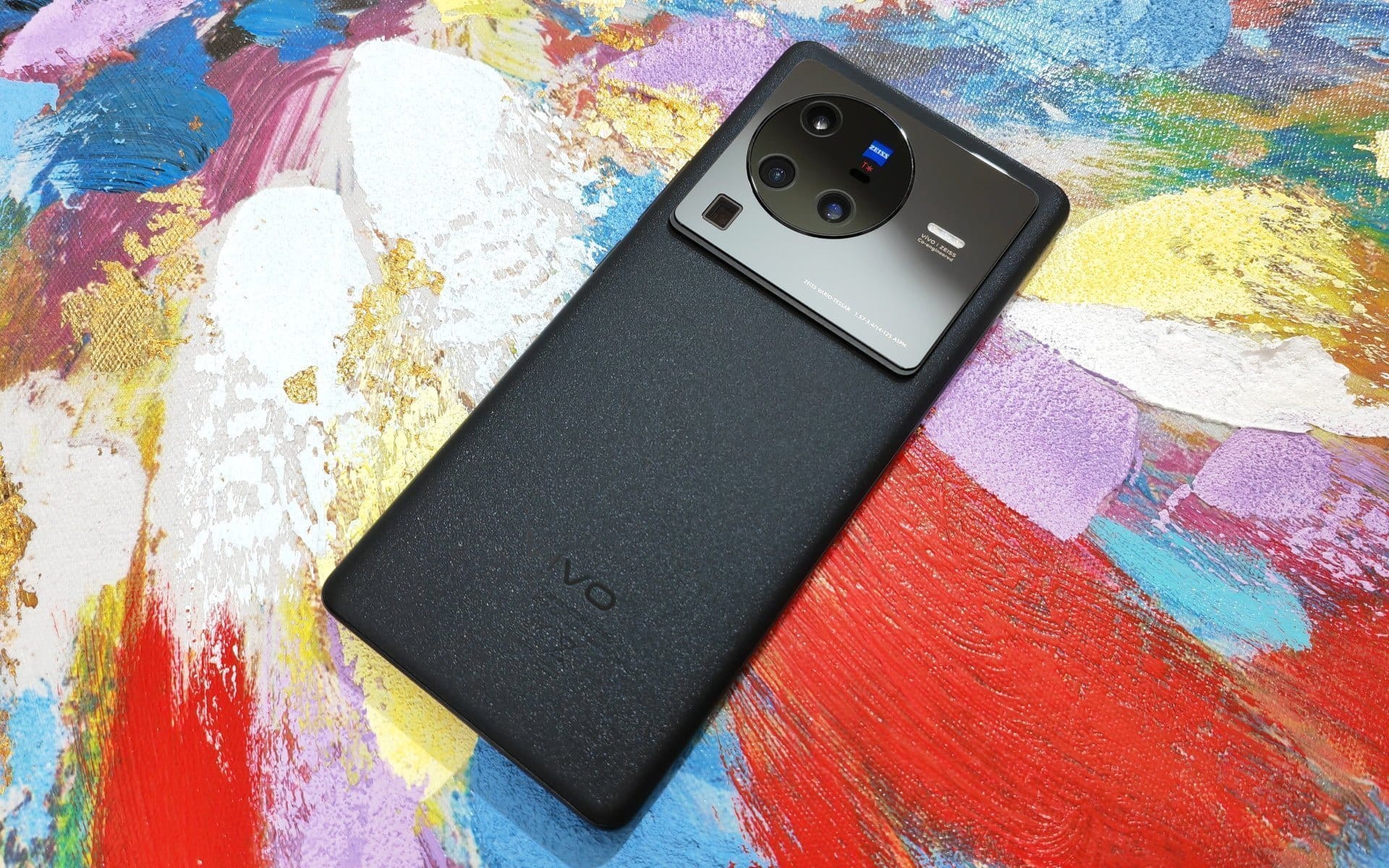
Due to its reflective surface, the camera module is visibly distinct from the matte rear of the housing. Although it protrudes 2 mm from the housing, its considerable size has the advantage that the smartphone remains stable when resting on its back and does not rock when typing.
vivo has framed three of the total four cameras in a circle, approximating the look of a camera lens. The ZEISS T* imprint indicates the special anti-reflection coating, which reduces stray light and ensures better light transmission. How this affects image quality will be discussed later.

The rear of the vivo X80 Pro is made of satin-finished glass, giving the smartphone a pleasantly delicate, albeit somewhat slippery, feel. Fingerprints hardly remain on the slightly shimmering back. However, they do appear on the reflective camera block.
The colour "Cosmic Black" is the only colour option vivo offers in Europe. But that does not matter, because in terms of aesthetics, the vivo X80 Pro in Cosmic Black is hardly beaten.

Both the glass back and the display protection consist of tempered special glass. The back uses particularly shatterproof Corning Gorilla Glass 6.
The display glass again comes from ZEISS subsidiary "SCHOTT", which offers "SCHOTT Xensation Up" on the market, a lithium-aluminosilicate glass with particularly high scratch resistance. We could very well verify the quality promise of both protective glasses in the test. Although the smartphone was used in everyday life without a case, it still looks as good as new.
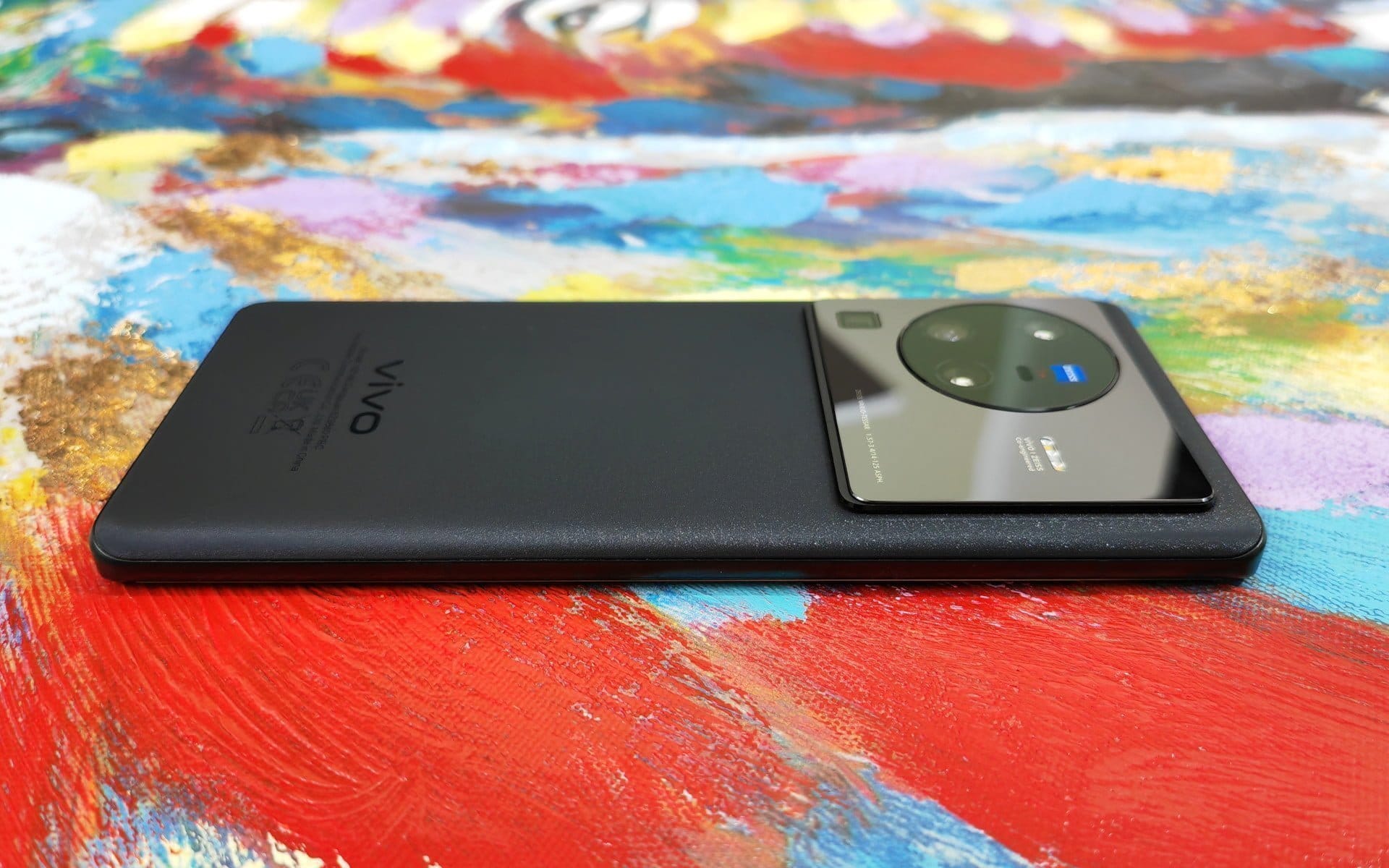
Between the glass sandwich is a metal frame that tapers thinly on the left and right. This causes the display and back to almost merge, resulting in a sleek appearance and contributing to a positive hand feel. The control buttons are positioned on the right and are easy to reach. Made of metal like the frame, they offer excellent tactile feedback.
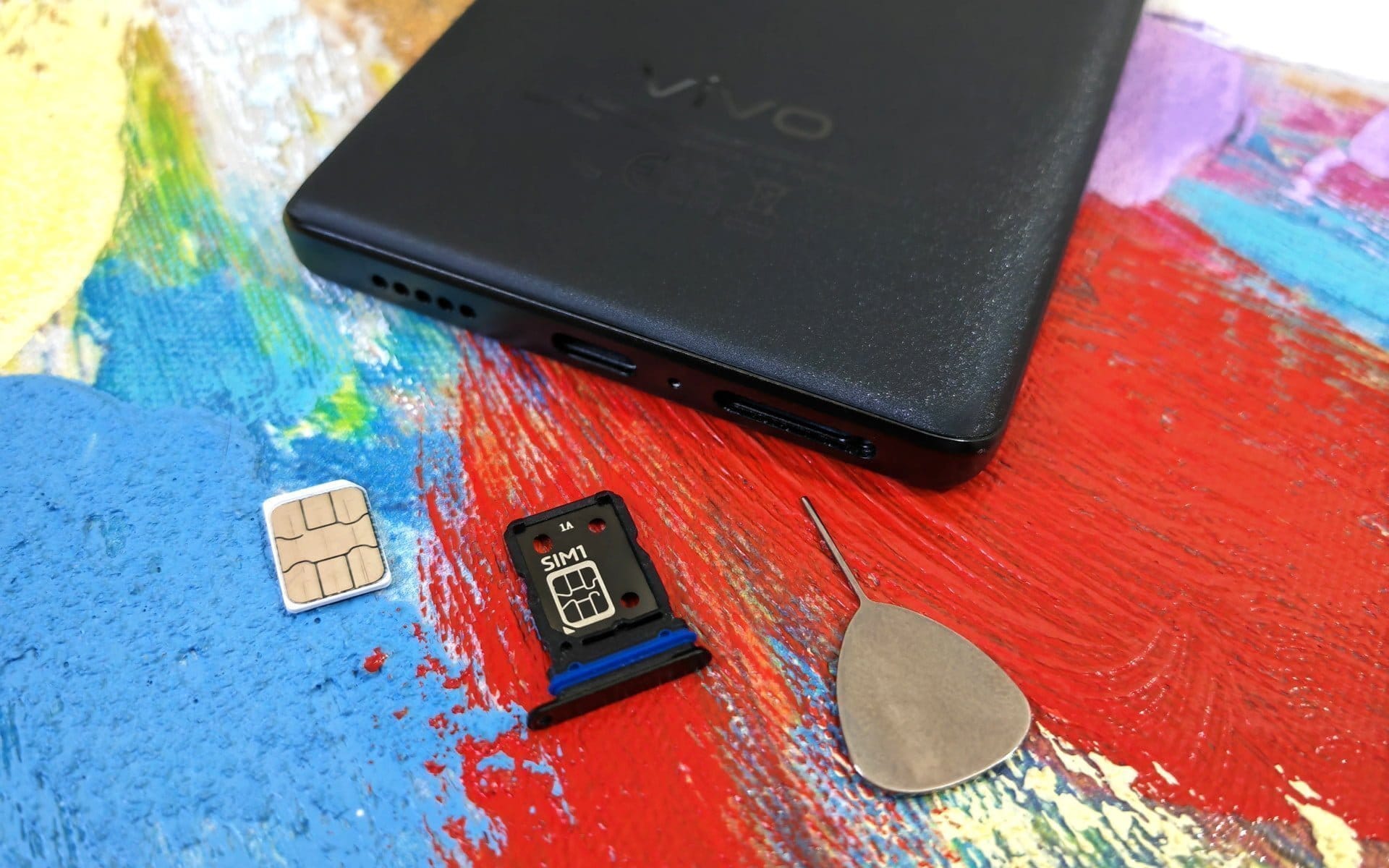
The frame is flattened at the top and bottom. The dual Nano-SIM slot is embedded in the bottom end of the frame. The USB-C port is in the centre, with a microphone to its left and a speaker to its right. A glass element with the inscription "Professional Photography" provides a nice finish at the top end of the frame. Another microphone and an IR blaster are placed there.

The build quality of the vivo X80 Pro matches its premium look and meets even the highest standards. It is rated IP68, making the smartphone both waterproof and dustproof.
The box contents leave nothing to be desired. The included accessories comprise a protective case, an 80W fast charger, a charging cable, wired headphones, a SIM ejector tool and the usual paperwork. A screen protector is pre-applied at the factory.

vivo X80 Pro: Display
The front features a 6.78-inch Samsung E5 OLED display with 3200 x 1440 pixel resolution and a 20:9 aspect ratio. The panel is an LTPO3 type and supports a variable refresh rate between 1 Hz and 120 Hz. As a 10-bit display, it can display up to 1.07 billion colours.
So much for the technical side. However, the vivo X80 Pro's display impresses not only on the spec sheet but also in everyday use. With a pixel density of 517 PPI, the representation is razor-sharp. In the settings, the resolution can also be switched between 2400 x 1080 and 3200 x 1440. To the eye, the difference is not visible. As for battery life, you get a few minutes for free.

The variable refresh rate makes the display silky smooth, preventing unsightly ghosting effects when scrolling. With the ‘Intelligent switching’ setting, the smartphone automatically scales between 1 Hz and 120 Hz. However, this does not always work reliably, so it occasionally does not look quite as fluid as one would like. As an alternative to intelligent switching, 60 Hz or 120 Hz can be selected. The latter definitely ensures the best display but also increases power consumption.


For example, Intelligent Switching in the Chrome browser only displays 60 Hz. With the 120 Hz setting, the 120 Hz is fully utilised, which results in visibly smoother scrolling. Mobile games are limited to 60 Hz regardless of the setting, even if higher FPS are achieved. By the way, 1 Hz is only achieved at maximum display brightness.

According to vivo, the "Local Peak Brightness" reaches a value of 1500 nits. Our colorimeter measured a maximum display brightness of 1013 nits in the test. This means the screen remains very readable even in sunlight. The automatic brightness adjustment also reacts quickly.
Colour adjustments can be made via the three colour profiles ‘Standard’, ‘Professional’ and ‘Bright’. The Standard profile is based on the DCI-P3 colour space and ensures vivid colours. The Professional profile is based on the sRGB colour space and attempts to reduce the colour distance (Delta E). In comparison, the representation is somewhat paler, but also closer to reality. Finally, there is the Bright profile, which further intensifies the colour intensity of the Standard profile.
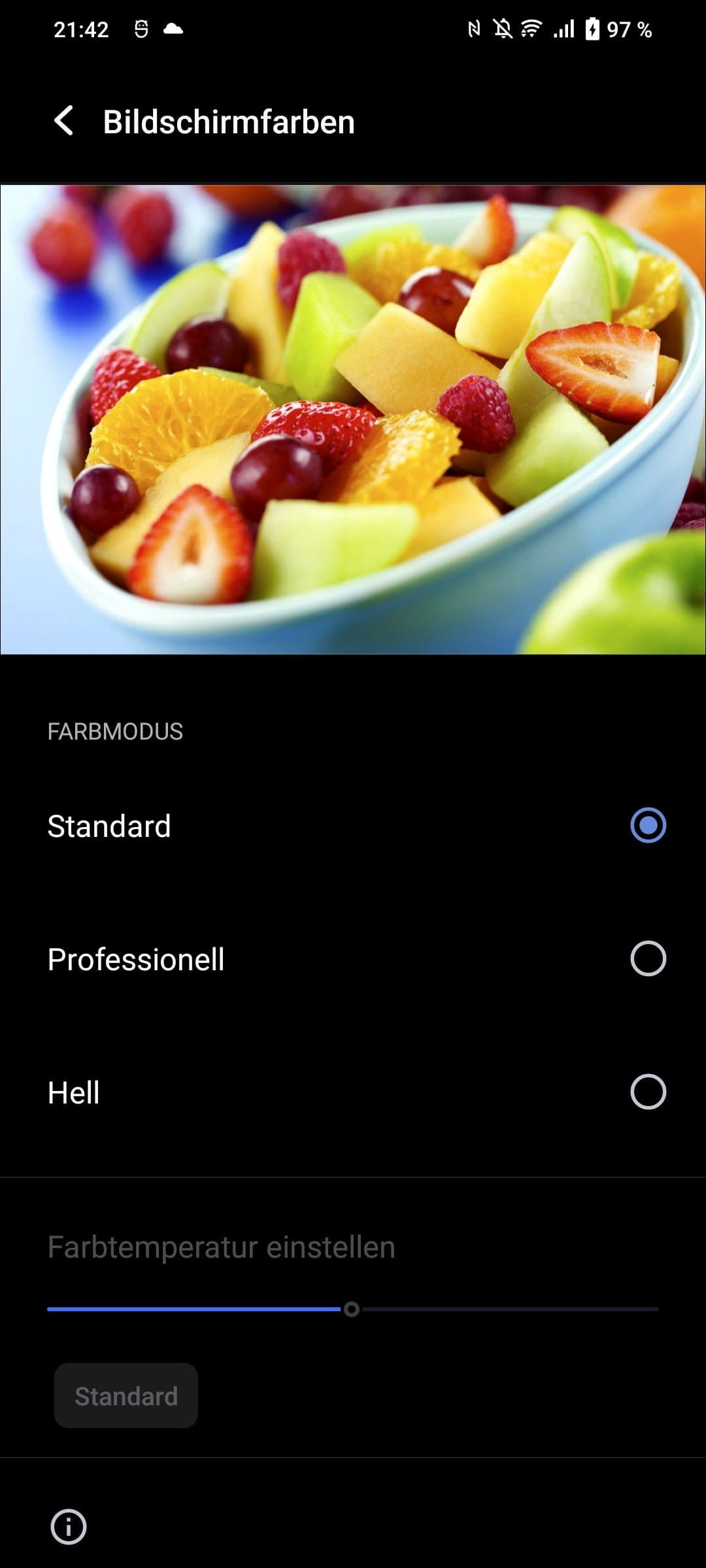


For further adjustments, there is a colour temperature control. All three colour profiles are predominantly tuned cool, so you can bring a bit more warmth into the display via the colour temperature.

Another display feature is the support for HDR10+. Streaming HDR content via Netflix and YouTube worked reliably in the test. The Widevine L1 DRM required for Netflix HD is present.
The touchscreen with a 300 Hz sampling rate recognises up to ten simultaneous inputs. Occasionally, repositioning the display can trigger erroneous inputs. The culprit is the pronounced curvature of the display edges (curved display), which primarily enhances the aesthetics. The curved display edges of the vivo X80 Pro are less prone to colour distortions. They do exist, but we have previously reviewed candidates that exhibited a significantly more pronounced shadow effect depending on the viewing angle.
vivo X80 Pro: Performance and features
To meet the demands of a high-end smartphone, the vivo X80 Pro uses Qualcomm's Snapdragon 8 Gen 1. Although this mobile platform has since been replaced by the Snapdragon 8 Gen 1+, it was the fastest mobile platform from the manufacturer at the time of the smartphone's release.
In China, the smartphone is even available in two variants. In addition to the Snapdragon model, they offer a vivo X80 Pro with a Dimensity 9000 there.
But back to the Snapdragon 8 Gen 1. The system-on-chip (SoC) is manufactured using the efficient 4 nm process and is based on ARM's v9 architecture. The CPU consists of eight cores, divided into three clusters. One Prime-Core with a clock rate of 3 GHz is responsible for performance-intensive tasks. There are also three Cortex A710 cores with a clock rate of 2.5 GHz for normal tasks and four Cortex A510 cores with a clock rate of 1.8 GHz for power-saving tasks. An Adreno 730 graphics accelerator is installed for graphical applications.

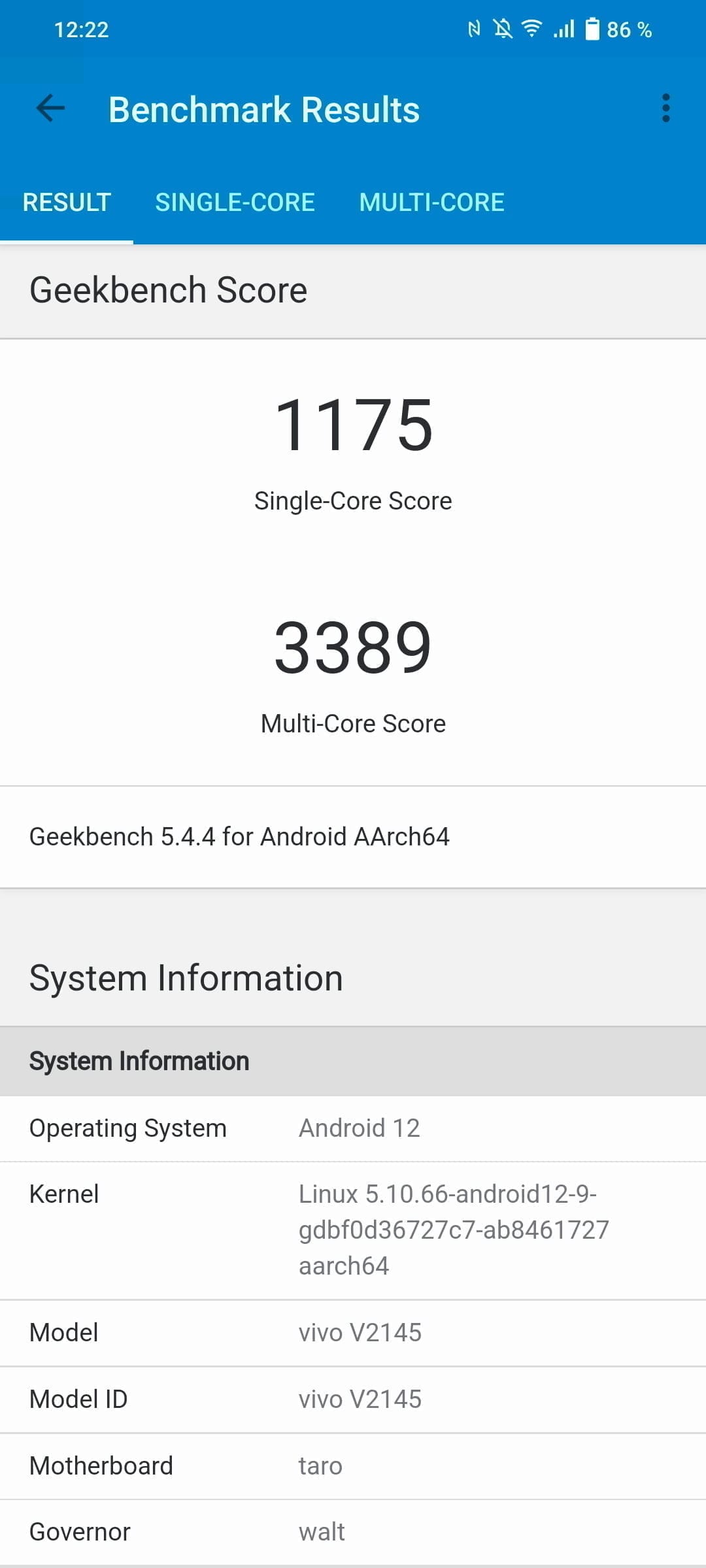

In benchmarks, the vivo X80 Pro is on par with other smartphones featuring the Snapdragon 8 Gen 1. Compared to a Motorola Edge 30 Pro or HONOR Magic 4 Pro, there are hardly any differences in the scores achieved. But it is also fast in everyday use and handled every application and mobile game effortlessly in our test.
A problem affecting all smartphones with the Snapdragon 8 Gen 1 is thermal throttling of performance (Thermal Throttling). To prevent overheating, the vivo X80 Pro already adjusts the performance curve downwards after 5 minutes. After 10 minutes, performance drops to 71% of maximum performance. In everyday use, thermal throttling is not noticeable. There are hardly any situations where full performance is required continuously. Even in demanding mobile games like Diablo Immortal or PUBG, FPS remain constant and heat generation is limited.
The Snapdragon 8 Gen 1 is complemented by fast memory modules. It features 12GB LPDDR5 RAM and a 256GB UFS3.1 data storage. The smartphone is not available in other memory variants at least in Europe. Expansion of the internal memory using a microSD memory card is not supported.
Software
On the software side, we have the Funtouch OS 12 user interface developed by vivo. The system is based on Android 12 and has been expanded with several features and adapted in terms of user guidance. Among other things, Funtouch OS 12 offers a range of various widgets that can be placed on the home screen, and there are personalization options, such as dynamic animation effects for the fingerprint scanner, face recognition and the charging process.
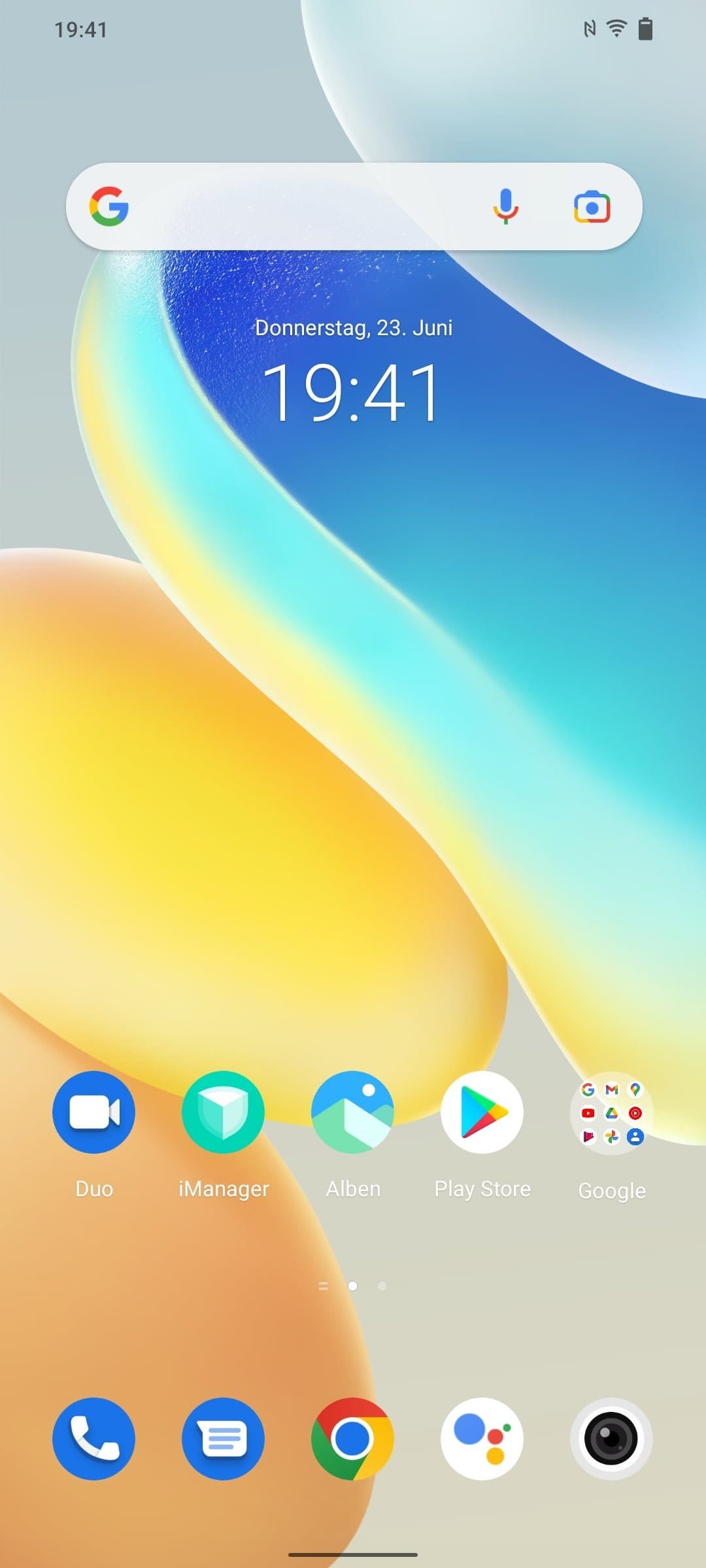


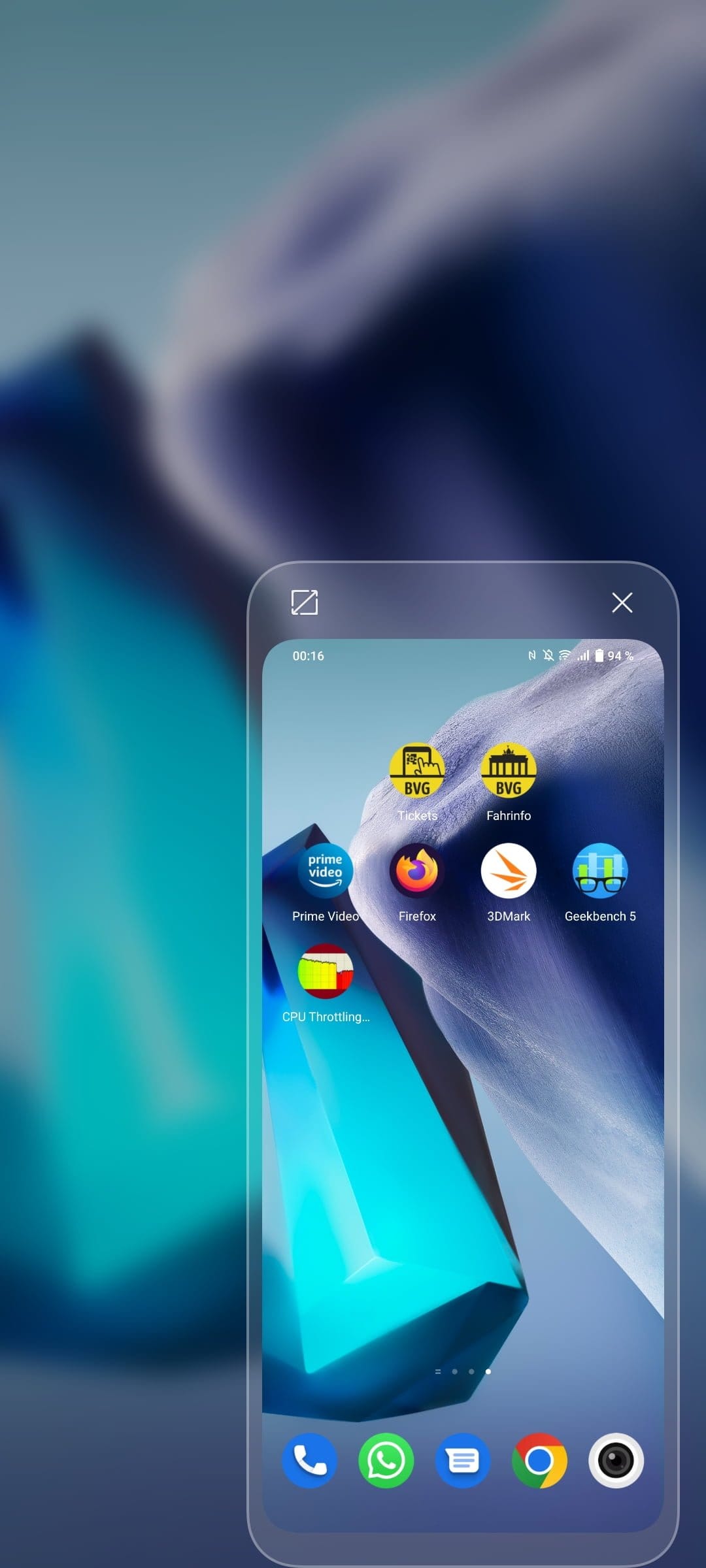
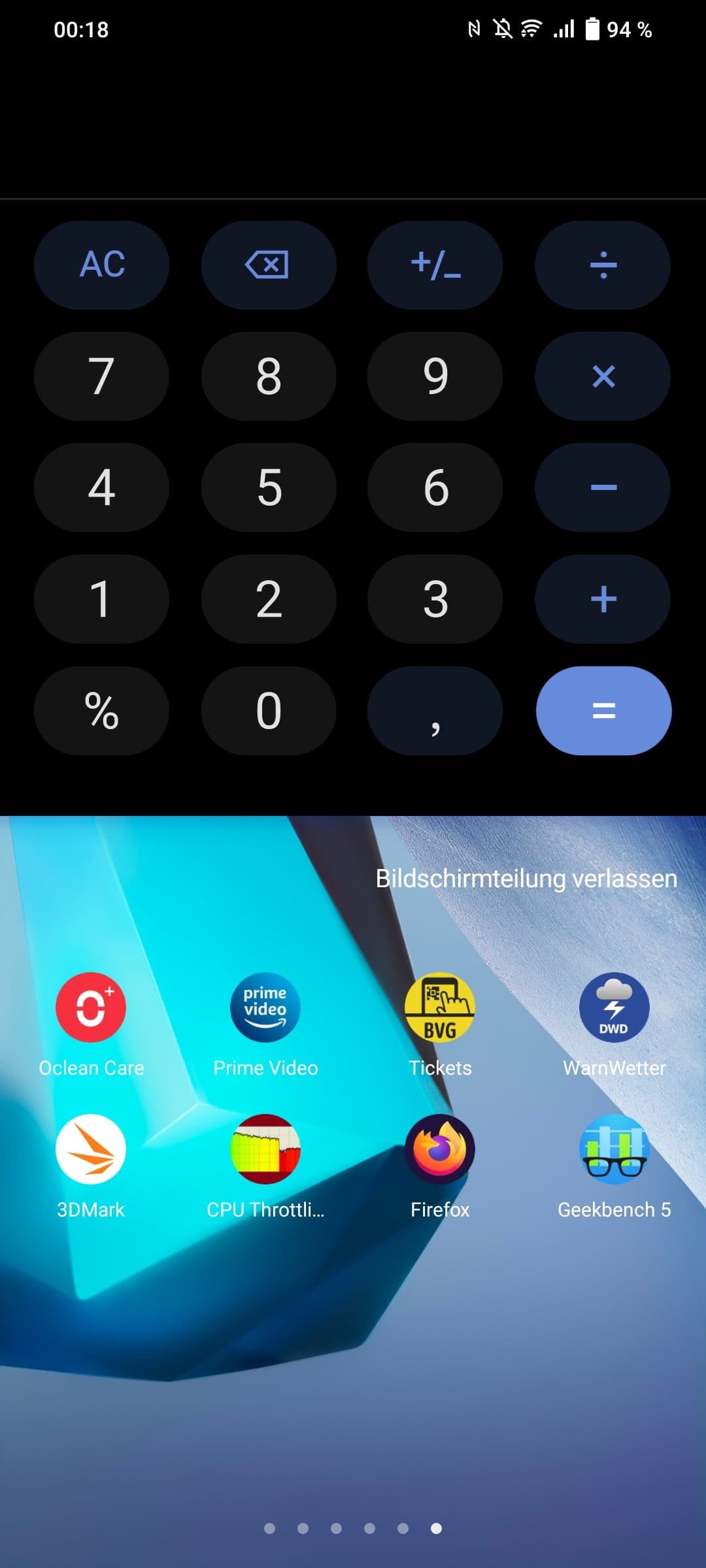
The user guidance has been adapted to facilitate one-handed operation. A customizable mini display that can be controlled with the thumb can be called up on the display via a gesture. There is also the option to split the display in the middle to operate two apps in parallel.

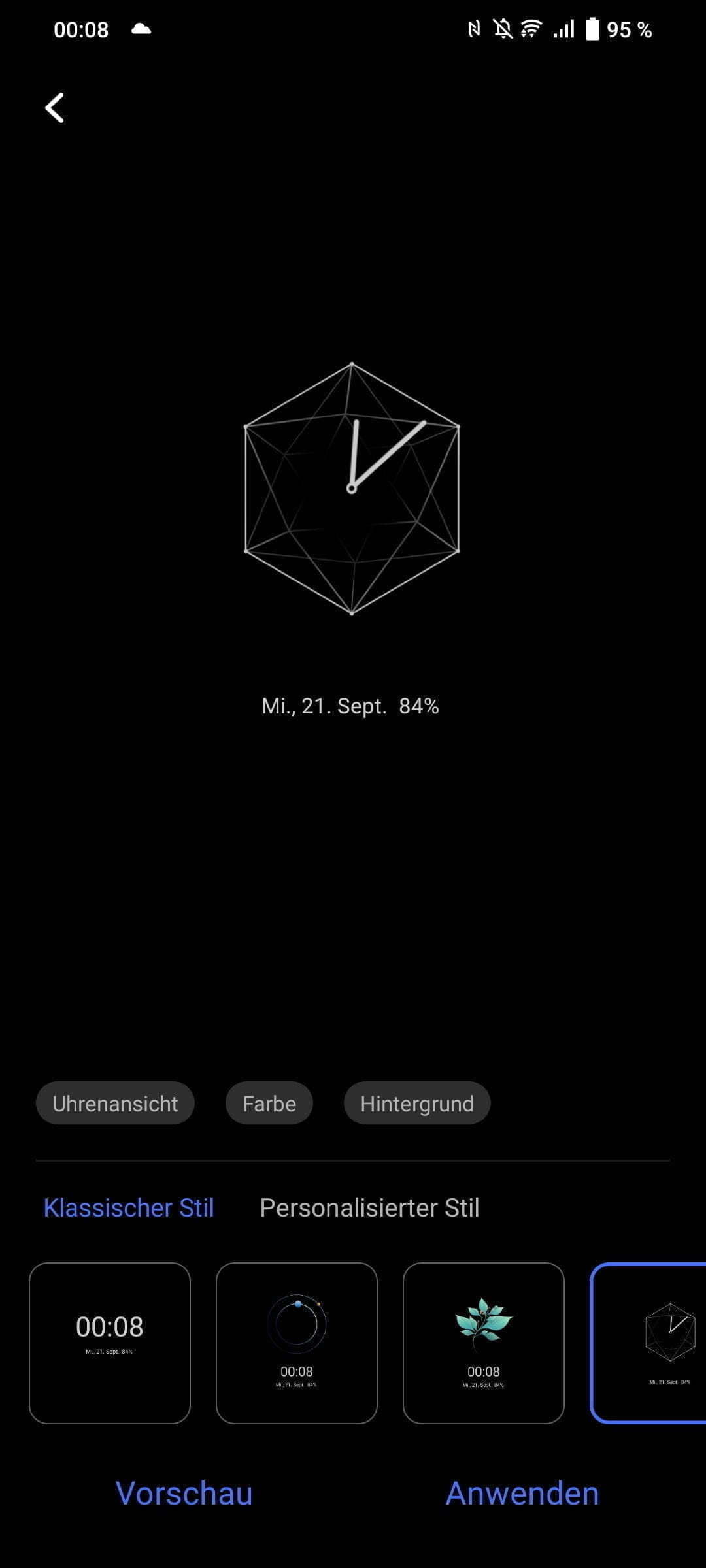
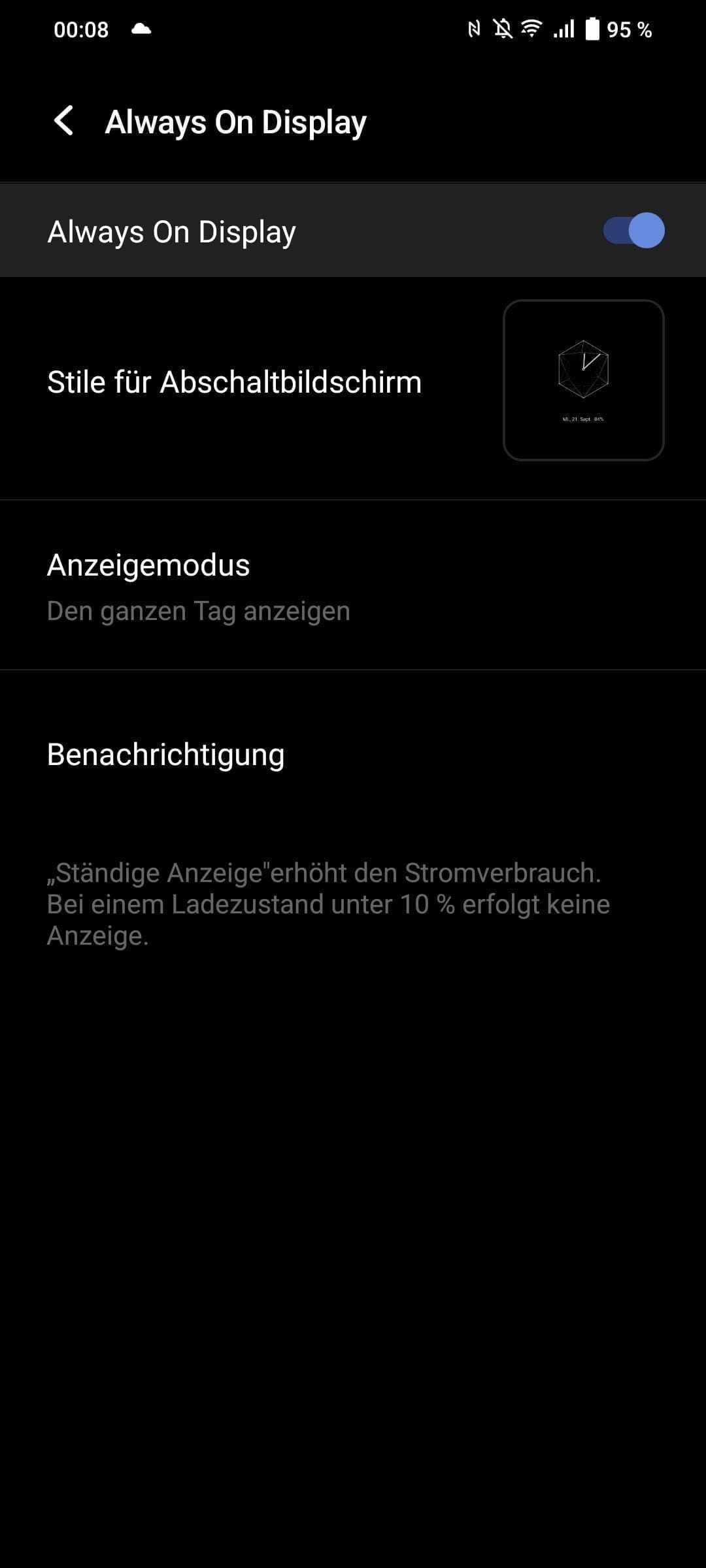
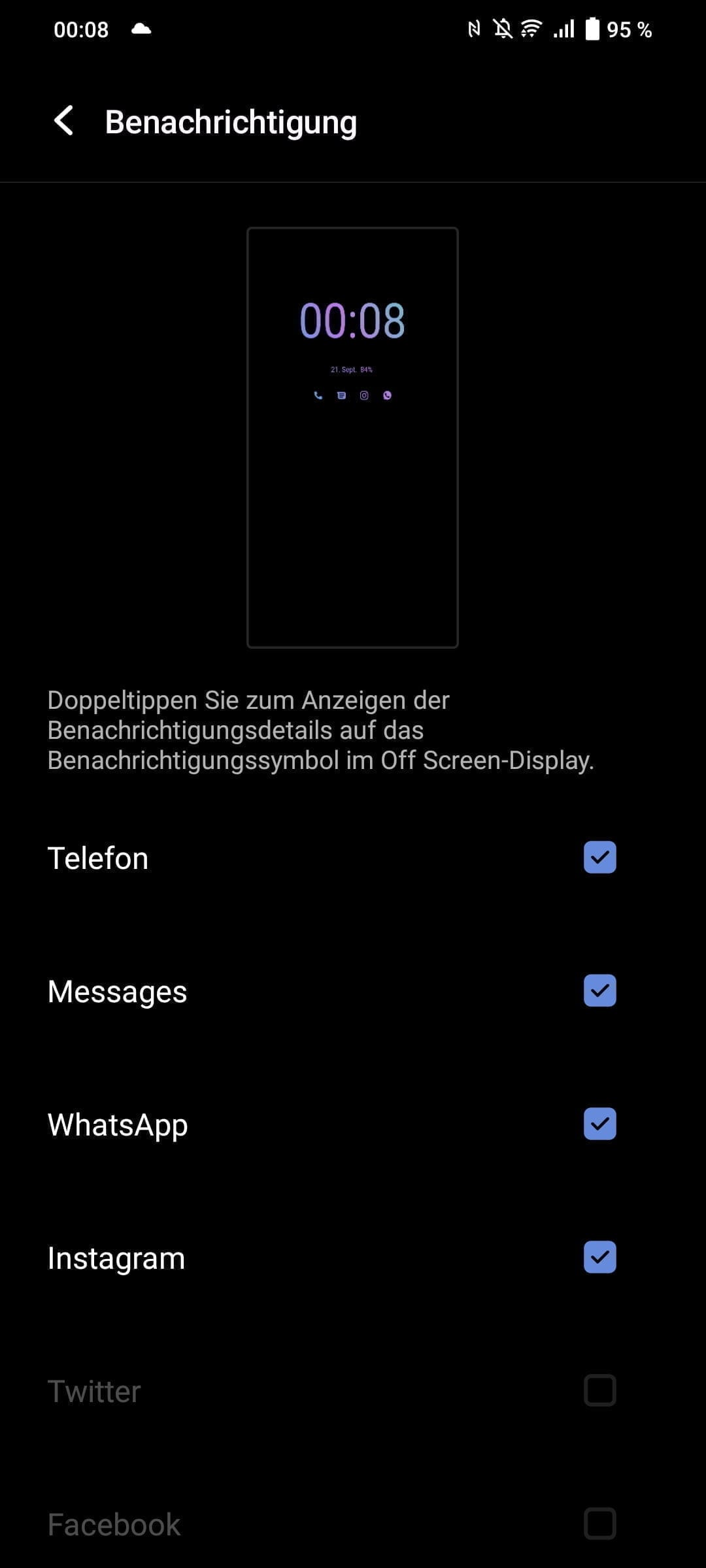
Funtouch OS 12 also integrates an always-on display. In addition to personalised styles, there are settings for display duration and which notifications are shown on the AoD.
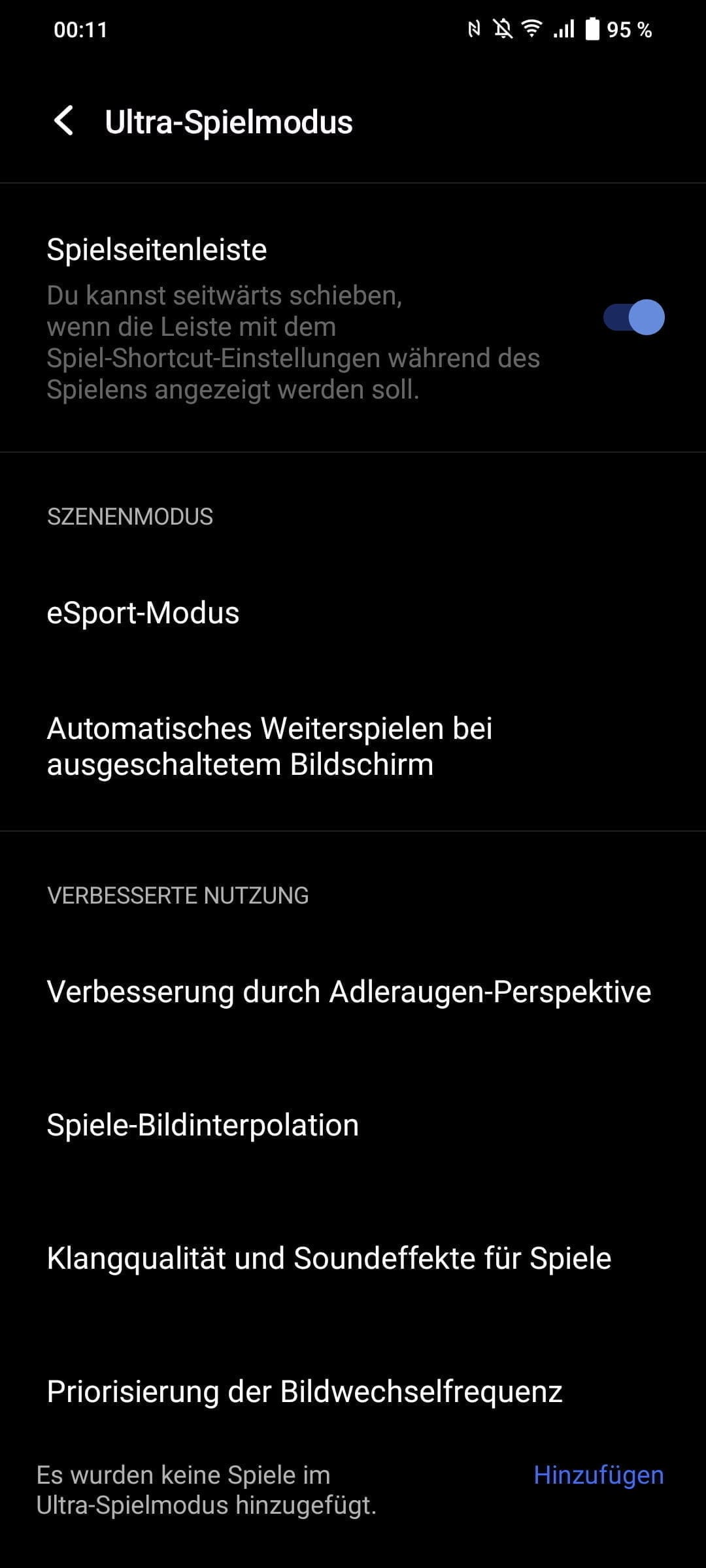
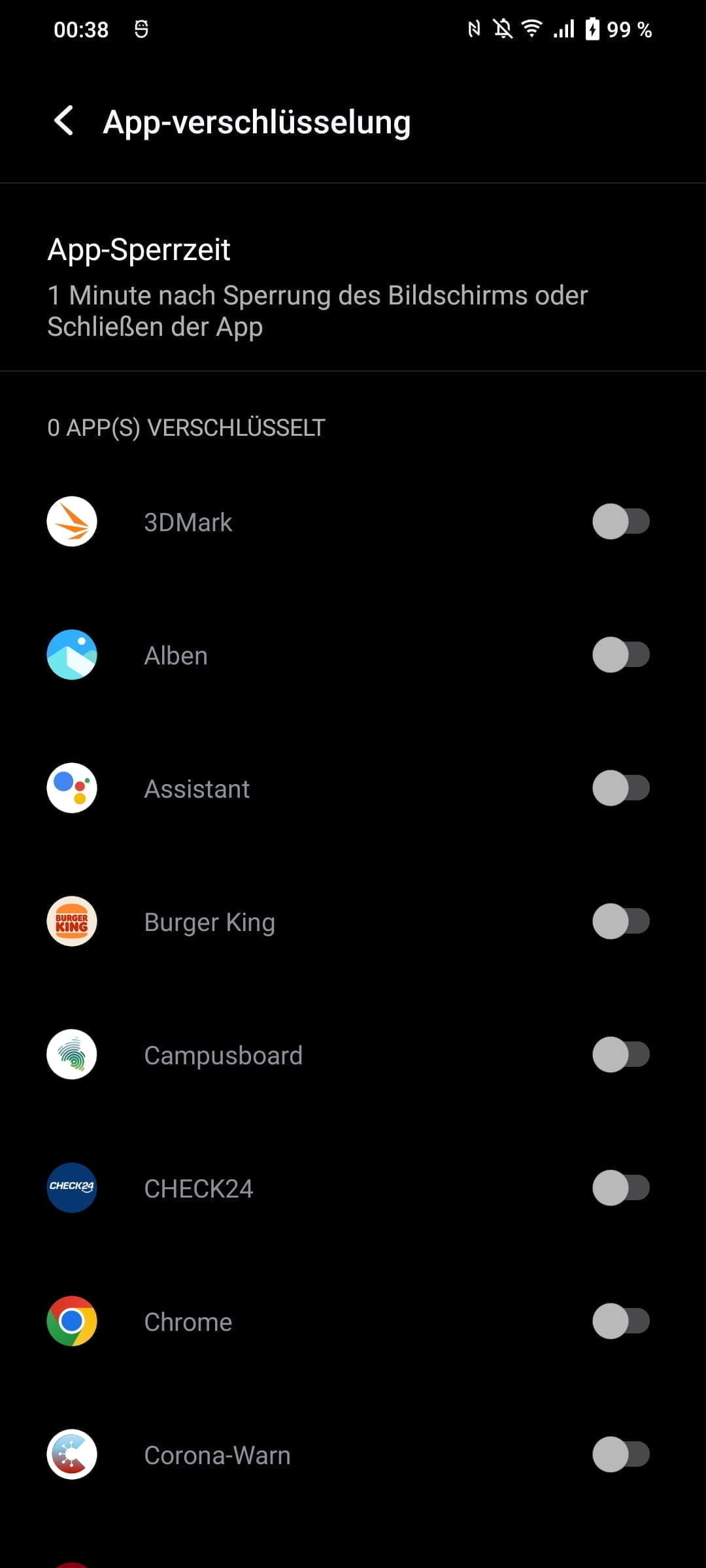
Notable are also the integrated app cloner, which allows apps such as WhatsApp, Facebook and Instagram to be duplicated, the ultra game mode for improving the gaming experience in mobile games, or the extended privacy options including app encryption.

vivo promises larger Android updates and security patches for a period of three years. Updates to Android 13 and 14 are thereby guaranteed. An update to Android 15 is at least still possible. The monthly security patches have so far been delivered promptly.
Connectivity
The vivo X80 Pro offers all the connectivity standards expected of a high-end smartphone. For calling and mobile surfing, the smartphone supports all important 4G and 5G frequency bands (sub-6GHz). In addition, VoLTE and VoWiFi are supported. The smartphone performs flawlessly in terms of reception and voice quality.
On Wi-Fi, the smartphone communicates with WiFi 6. We would have liked WiFi 6E here, as more and more routers now cover the 6 GHz frequency band as a 'Wi-Fi fast lane'. So we have to make do with 2.4 GHz and 5 GHz, but there is nothing to criticise about the data throughput of the vivo X80 Pro.
Additionally, there is Bluetooth 5.2, NFC and an IR blaster for controlling devices with infrared receivers (TVs, stereos, etc.). For location determination, the smartphone relies on GPS, BEIDOU, GLONASS, GALILEO, QZSS, A-GPS, cellular positioning and WLAN positioning.
Fingerprint scanner
The 3D ultrasonic fingerprint sensor of the vivo X80 Pro is unbeatable. The scan area is 11.1 times larger than that of a conventional smartphone with an in-display scanner. But that is not all. During setup, the finger is registered after just one placement. You save yourself the repeated lifting and placing down of the finger that is usually required.
Nevertheless, the fingerprint scanner of the vivo X80 Pro is no less secure or inaccurate. The sensor is extremely precise over a wide area and unlocks the smartphone with outstanding speed. Private content can even be secured via two-finger verification. Instead of using just one finger, the smartphone only unlocks when two registered fingers are placed on it.
Audio
The stereo speakers, which consist here of the speaker on the underside and the ear cup, deliver a full and balanced sound. Both speakers achieve a high and evenly distributed volume without distorting.
There is no 3.5 mm headphone jack. Instead, you have to rely on Bluetooth or USB-C. Notable Bluetooth audio codecs of the vivo X80 Pro are aptX, aptX HD, aptX adaptive and LDAC.
vivo X80 Pro: Camera
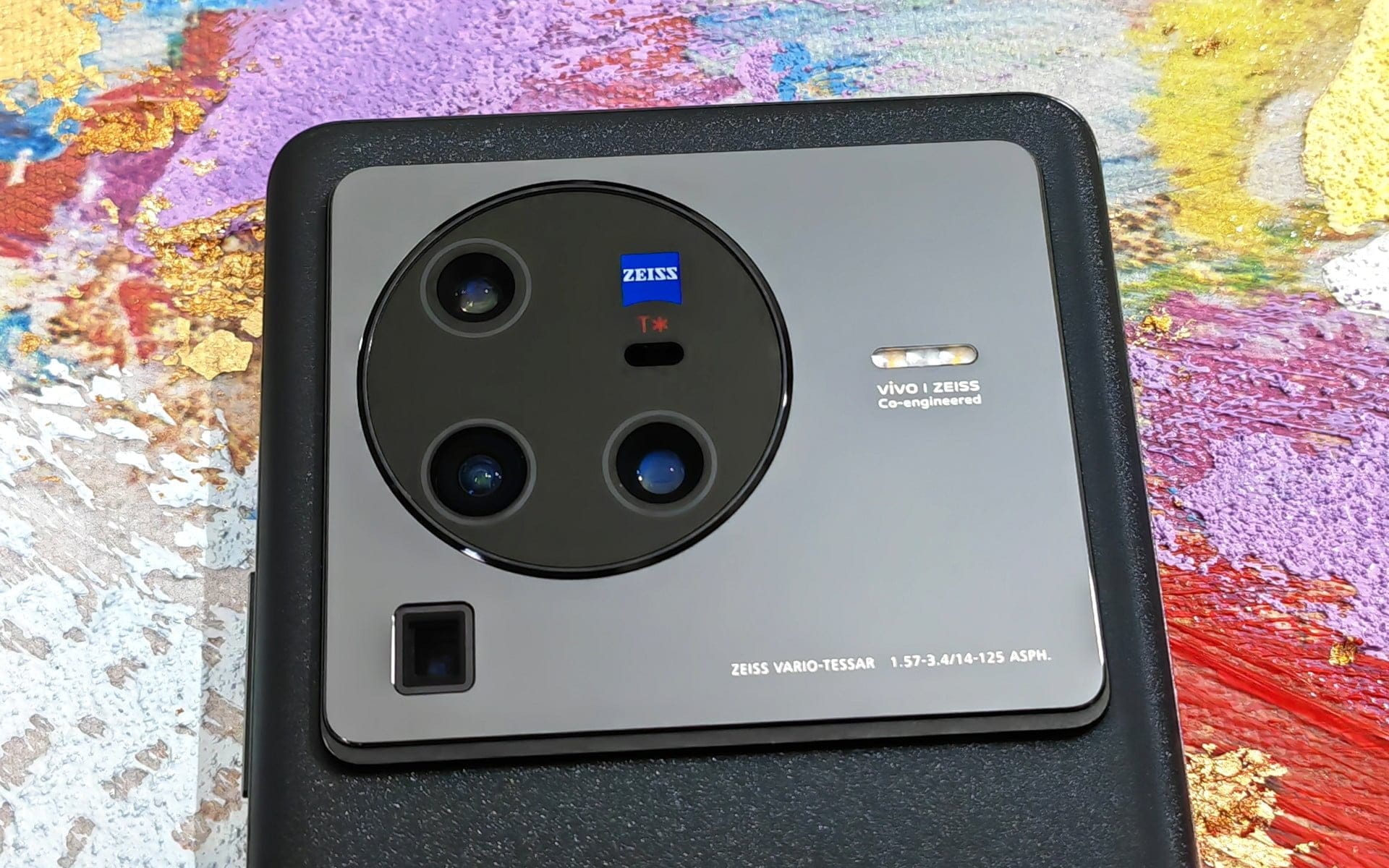
Vivo attempts to offer a as versatile camera experience as possible with the vivo X80 Pro's camera system, capable of handling all situations. A total of five sensors are used, each fulfilling different purposes. Here is an overview:
- Main camera: 50 MP Samsung GNV (1/1.31" | 1.20 µm | f/1.57 | OIS)
- Ultra-wide-angle camera: 48 MP Sony IMX598 (1/2" | 0.80 µm | 114° | f/2.2)
- Telephoto camera: 12 MP Sony IMX663 (1/2.93" | 1.22 µm | 2x optical | f/1.85 | OIS)
- Telephoto camera (periscope): 8 MP Hynix HI-847 (1/4.4" | 1.0 µm | 5x optical | f/3.4 | OIS)
- Front camera: 32 MP Samsung S5KGD2 (1/2.8" | 0.80 µm | f/2.45)
It is notable that vivo uses two telephoto cameras here. One enables a lossless 2x zoom, the other a lossless 5x zoom. The main camera again benefits from gimbal stabilisation, which can now even fix the image on the horizontal axis during a 360° rotation. Both telephoto cameras are optically stabilised (OIS).
Thanks to the collaboration with ZEISS, the lenses feature a ZEISS T* anti-reflective coating, which improves light yield and is intended to prevent light reflections (ghosting). This is not empty marketing jargon, but actually works. In addition, there is the vivo V1+, an improved version of the in-house image processing chip.
Main camera
The 50 MP main camera utilises the advantages of pixel binning. In this process, several pixels are combined into one large pixel, which increases light sensitivity and reduces the signal-to-noise ratio. The images are shrunk to 12.5 MP.
In good lighting conditions, the sensor enables very good shots with remarkable sharpness and impressive detail. Colours are rendered very vividly. In terms of dynamic range and noise, the Samsung GNV does a great job. We took our test shots in various situations.















An interesting camera feature is the ZEISS Natural Color mode. If the mode is activated in the camera app, the most natural colour consistency possible is achieved. This is particularly useful for users who value authenticity, but also for photo or video professionals who desire a flatter representation.


Even in poor lighting conditions, well-exposed photos with a wide dynamic range and good colour reproduction are produced. The level of detail is decent, albeit with the sharpening characteristic of night mode – not excessive, but not exactly natural either. Noise is barely visible, even in the shadows.


In total darkness, the night mode can conjure up a few more details and brightness on the image. In most cases, however, it is not worth switching it on, as the vivo X80 Pro produces great night shots even without night mode.
Ultra-wide-angle camera
The ultra-wide-angle camera is one of the better UWA cameras we have come across so far. However, it cannot match the main camera’s recording quality in terms of sharpness and level of detail. Colours are rendered particularly vibrantly, and the dynamic range is also impressive.


The vivo X80 Pro does not have a macro camera, but the ultra-wide-angle camera features an autofocus and can therefore also be used for close-ups.
The macro mode can be set via the camera app. You either activate the "Super Macro Auto" setting, where the camera automatically decides when switching to macro mode makes sense, or you switch to macro mode manually.
Camera zoom
The lossless 2x zoom is well matched to the colour rendition and dynamic range of the main camera. The level of detail is good, though not quite as high as that of the main camera.



The same applies to the 5x zoom. Beyond the 5x magnification, image quality gradually decreases. The maximum zoom level ends at 60x magnification.


Video function
The vivo X80 Pro’s main camera can record videos including in 8K30 and with a higher frame rate in 4K60. The ultra-wide-angle camera records in 4K60, while the two telephoto cameras record in 1080p30.
The video functions of the vivo X80 Pro are very extensive. Those who like to film in cinematic style can use the special ZEISS Cinematic Mode to record videos in the typical film format at 21:9 and 24 frames per second.
The mode offers even more, however. Using artificial intelligence, a bokeh effect is generated during recording in real time. Film LUTs and filters can also be applied directly to the footage. Here is our video about it:
 Play video on YouTube
In ZEISS Cinematic Mode, however, the resolution is limited to 1080p. There is also an additional film mode, which also records in a 21:9 aspect ratio at 4K and 30 frames per second, but without bokeh calculation.
Three stabilisation modes are available to stabilise video recordings. Standard stabilisation stabilises recordings up to 4K60. There is also Ultra stabilisation, which further intensifies the degree of stabilisation through artificial calculation. Here, the resolution is limited to 1080p60. The third mode is Horizontal stabilisation. In this mode, image stabilisation can be fixed on the horizontal plane, regardless of how you move the smartphone.
Switching to the ultra-wide-angle camera during an ongoing recording does not work. Zooming is possible with up to 10x magnification. However, in video mode, zooming is purely digital via the main camera. The two telephoto cameras are not included.
Further video features include an HDR10+ recording mode, a teleprompter function, and Beauty AI and filters. The video quality of the vivo X80 Pro is outstanding and convincing both day and night.
Front camera
The 32 MP front camera is excellent for selfies and video calls. Photos and videos taken with it show a high level of detail and balanced colour reproduction, particularly rendering skin tones naturally.


The camera app features numerous functions to enhance selfies. There are various overlays, makeup, beauty, and pose filters, as well as colour filters. In addition to the standard photo mode, there is a portrait mode with depth of field. The depth of field is adjustable in nine steps between f/16 and f/0.95.
vivo X80 Pro: Battery
The vivo X80 Pro is equipped with a 4700 mAh battery, which can be charged wired at 80W and wirelessly at 50W.
The Snapdragon 8 Gen 1 is not exactly known for its energy efficiency, so a screen-on time of 13 hours can be considered a rather average figure. In everyday use, this translates to a battery life of 1 to 1 1/2 days, depending on usage intensity.
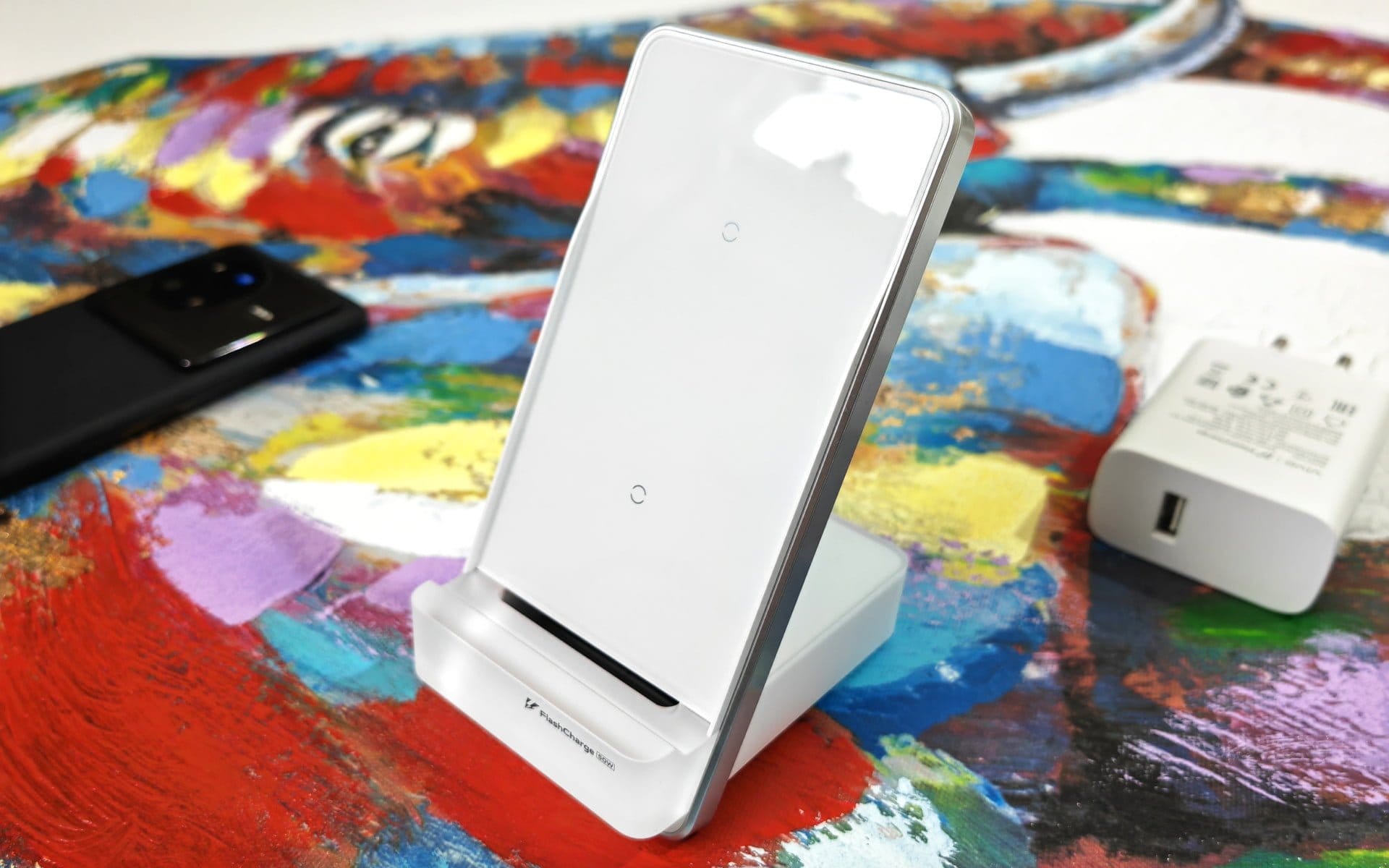
A compensation for the rather meagre battery life is the fast charging time. With the included 80W FlashCharge charger, the smartphone can be fully charged in 38 minutes. The 50W Wireless Flash Charger charges the smartphone from 0 to 100% in 50 minutes.
As an additional charging function, 10W reverse charging is supported. The vivo X80 Pro then acts like a power bank and can charge devices in reverse.
Our verdict
The vivo X80 Pro scores with first-class hardware. Above all, the camera system stands out, delivering results in almost every discipline. Photos and videos turn out well day and night, and the ZEISS imaging system offers useful additional functions for even more artistic freedom.
But it is not only the camera of the vivo X80 Pro that operates at a top level. The LTPO display with a smooth 120 Hz refresh rate shines extremely bright, has high resolution (QHD+) and boasts precise colour reproduction.
The high-end Snapdragon 8 Gen 1 and the fast storage ensure that apps and games run smoothly. Nevertheless, the smartphone suffers from thermal throttling, which reduces performance under full load. This loss of performance is visible in benchmarks but not in everyday use.
The fingerprint scanner was a surprise, setting up with a single touch and reacting in fractions of a second over a wide area. Definitely one of the understated highlights of the vivo X80 Pro!
In the end, the only thing that bothers us is the battery life, which is rather average at 1 1/2 days of usage with normal use. We would have liked it to be half a day longer. At least there is a fast charging function, which charges the smartphone quickly with 80W wired and 50W wireless.
Specifications
Processor and memory
- CPU
- Qualcomm Snapdragon 8 Gen 1
- GPU
- Adreno 730
- RAM
- 12GB LPDDR5
- Internal storage
- 256GB UFS 3.1
- Storage expansion
- No
Display
- Display size
- 6.78 inches
- Display resolution
- 3200 x 1440 pixels (517 PPI)
- Display refresh rate
- 120 Hz
- Display brightness
- 1000 nits (1500 nits peak)
- Display type
- OLED (LTPO3)
- Screen protector
- Unbekannt
- Sampling rate
- 300 Hz
- Other
- *HDR10+
- *Eye protection
Cameras
- Main camera
- 50 MP Samsung GNV (1/1.31" | 1.20 µm | f/1.57 | OIS)
- Ultra-wide-angle camera
- 48 MP Sony IMX598 (1/2" | 0.80 µm | 114° | f/2.2)
- Telephoto camera
- 12 MP Sony IMX663 (1/2.93" | 1.22 µm | 2x optical | f/1.85 | OIS)
- Telephoto camera
- 8 MP Hynix HI-847 (1/4.4" | 1.0 µm | 5x optical | f/3.4 | OIS)
- Front camera
- 32 MP Samsung S5KGD2 (1/2.8" | 0.80 µm | f/2.45)
Mains
- Dual SIM
- Yes (dual-SIM & dual-standby)
- SIM size
- Nano SIM
- eSIM
- No
- GSM
- 850/900/1800/1900 MHz
- WCDMA
- B1/B2/B4/B5/B8
- FDD LTE
- B1/B2/B3/B4/B5/B7/B8/B12/B13/B17/B18/B19/B20/B26/B28/B32/B66
- TDD LTE
- B38/B39/B40/B41/B42
- 5G NSA/SA
- n1/n2/n3/n5/n7/n8/n20/n28/n38/n40/n41/n66/n77/n78
Wireless
- Wi-Fi
- 802.11 a/b/g/n/ac/ax
- Bluetooth
- 5.2
- GPS
- Yes
- NFC
- Yes
Sensors
- *Ambient light sensor
- *Accelerometer
- *Color temperature sensor
- *E-compass
- *Gyroscope
- *Fingerprint sensor (in-display)
- * Infrared emitter
- *Laser focusing sensor
Battery
- Battery
- 4,700 mAh
- Fast charging function
- 80 Watt
- Qi charging
- 50 watts
Other
- Operating system
- Android 12 (Funtouch OS 12)
- Audio
- Stereo speakers
- Connection
- USB-C (USB 3.1)
- Size
- 164.57 x 75.30 x 9.10 mm
- Weight
- 219 g
What’s included
1x vivo X80 Pro 1x XE710 (USB-C headphone jack) 1x Quick guide 1x USB-C to USB cable 1x Charger 1x SIM tool 1x Smartphone protective case 1x Protective film (pre-applied) 1x Warranty card

Comments (8)
Does the smartphone support eSIM? Couldn't find anything on this. LG
Hello lk, the vivo X80 Pro does not support eSIM.
Kind regards
Timo
Hi Timo, can you tell me how I can get the Android 13 beta on my smartphone?
Hi Jan, some users were able to download the beta as a system update in August. Currently, this unfortunately no longer works, so I would wait a bit longer until Android 13 is rolled out as a stable version.
Hi, I'm a proud owner of a vivo X80 Pro and wanted to buy the wireless Flash Charger as well. Unfortunately, I can't find it anywhere. Amazon, Saturn and Media Markt sell the smartphone, but not the accessories. Do you have any advice?
Hi Sebastian, that's a good question. So far I have only found the original vivo Wireless Flash Charger at TradingShenzhen. You can of course also try a product from another manufacturer. Usually, the same charging standard is used.
Hi Timo, thanks for the tip. I ordered it from the store, but it will probably come from China. I’ll wait and see.
Hello, has anyone else received the Android 13 update on their device? When I search for updates, I get a message saying I am on the current version. But it is still Android 12.